LLM Model Selection and Cost Tradeoffs for Coding Agent Tasks
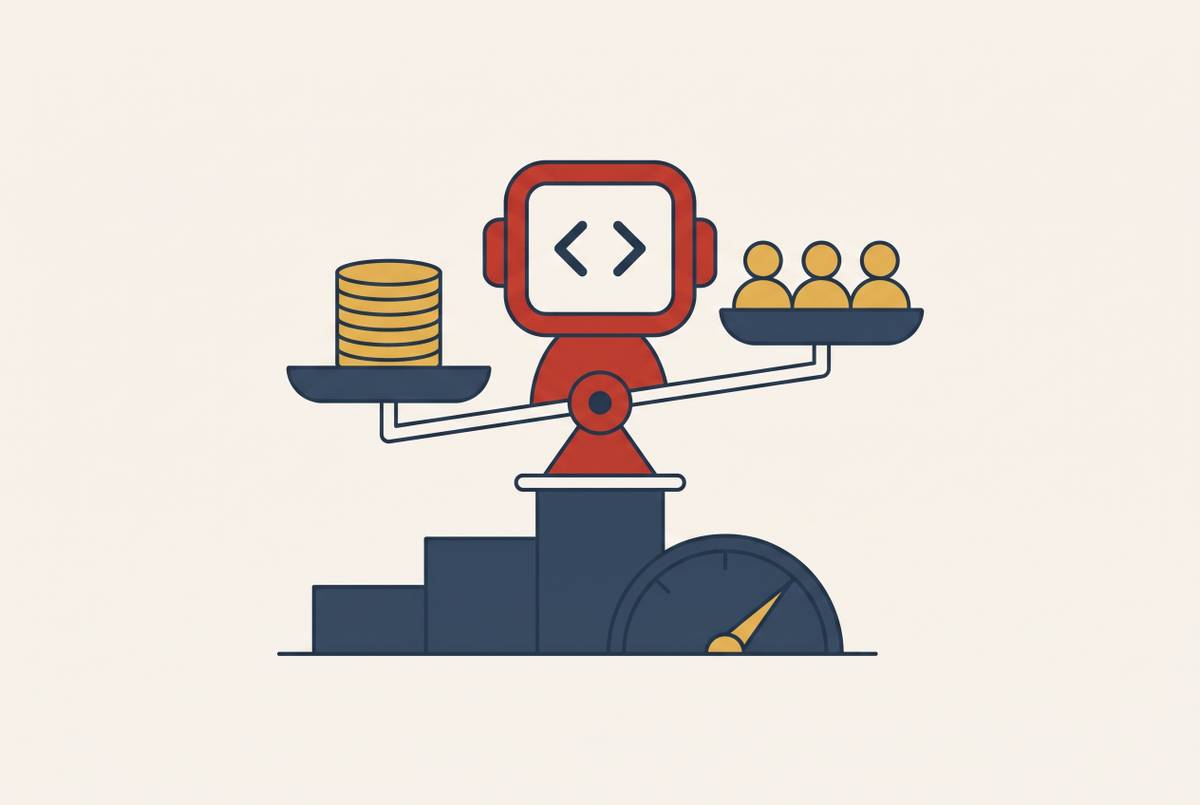
Route models by task type and cost, not by a single choice.
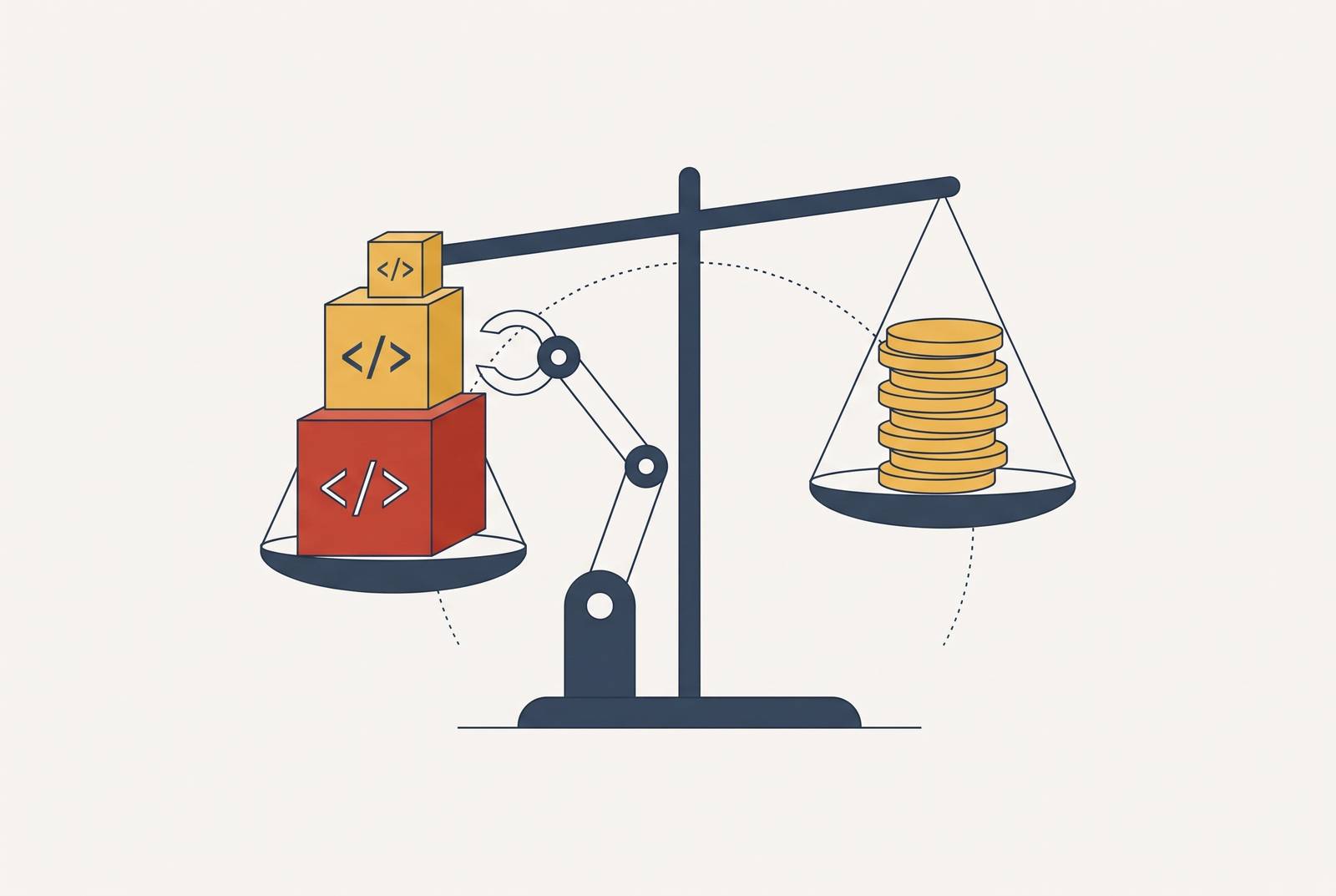
To stop AI coding agents from running up unexpected API bills mid-session, enforce token budgets and hard spend caps before execution, with automatic pause-and-alert behavior when a cap is breached. Set those controls and model-routing rules in version-controlled configuration. LLM model selection and cost control are one engineering problem, with task type, token volume, and reliability determining which model belongs at each step.
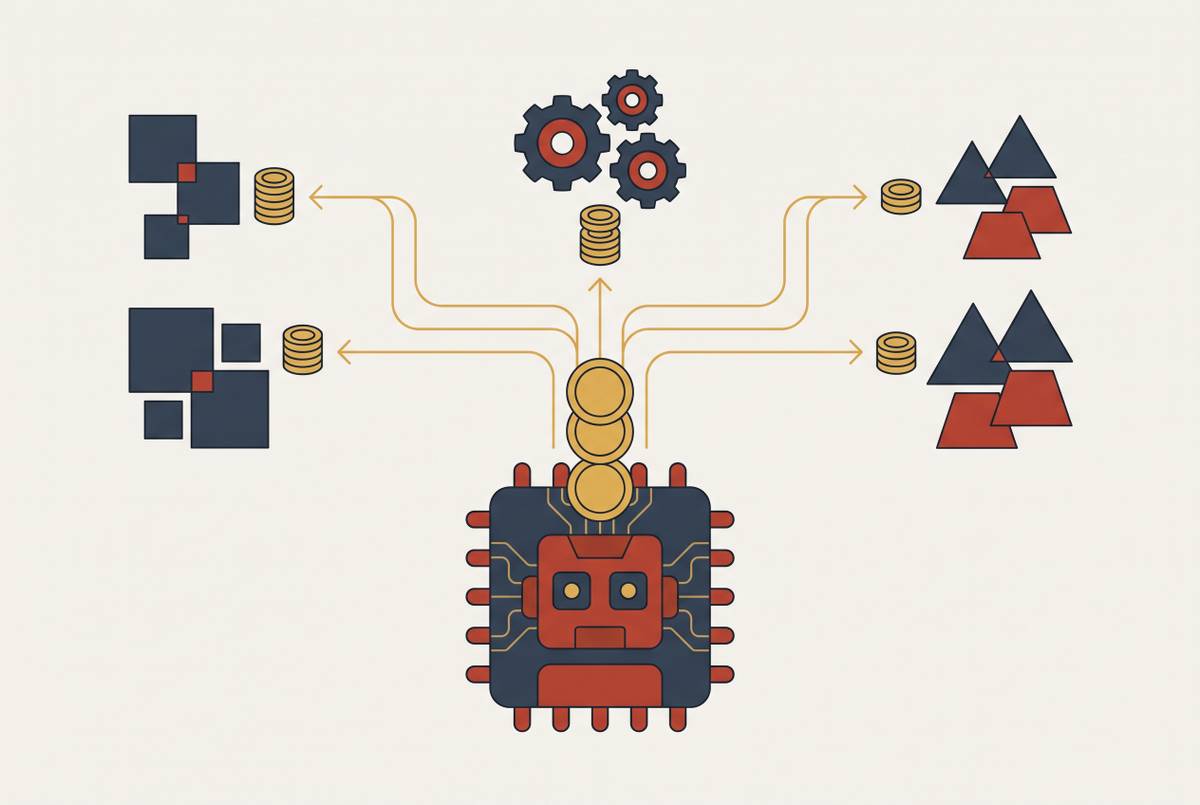
Why model selection for coding agents is a routing problem, not a single choice
A coding agent loop can consume 50,000 to 200,000 tokens per resolved issue. Reading files, planning, editing code, running tests, and retrying on failure all contribute to that total. Code generation accounts for only a small fraction. Repository scanning, context loading, system prompts, reasoning traces, and retries consume most of the tokens, while planning and iteration output can dwarf the generated code itself.
A flagship model applied to every call charges premium rates for repository scans and commit messages as well as difficult implementation work. Yet those steps have different quality requirements. Paying more for a low-ambiguity scan may leave the final patch no better, while paying too little for a complex edit can lead to costly retries.
The unit of design is therefore the loop. The harness determines how much context enters each call, how failures trigger retries, and how earlier work is reused. Those decisions now shape outcomes almost as much as model selection itself. Routing belongs in that architecture because its value depends on the work each call performs and the consequences of failure.
What the current model tiers actually look like and what each is suited for
The models available in 2026 differ in what they cost and what they can do, so they do not fall into a single order from best to worst. Anthropic positions Claude Opus 5, released July 24, 2026, for long-horizon agentic coding and multi-file tasks. It offers a very large context window and a high maximum output limit, but no open weights. Access is cloud-only through the Anthropic API, Amazon Bedrock, Google Cloud Vertex AI, or Microsoft Foundry. Its fit is complex refactoring and end-to-end feature work where a failed attempt costs more in human time than token spend.
GPT-5.6 Sol, released July 9, 2026, fits terminal-heavy agent loops and teams standardized on OpenAI tooling. Its cache economics favor long, repeatedly referenced contexts. Cache reads cost much less, while cache writes cost more than base input. SWE-bench Verified places it third, behind Opus 5 and DeepSeek V4 Pro 0813, while Terminal-Bench v3.0 places it second behind Opus 5. Vals AI’s LiveCodeBench run, published July 9, 2026, also recorded strong performance.
DeepSeek V4 Pro occupies the budget-workhorse tier. Its off-peak API rate doubles at peak, output tokens cost roughly three times the input rate, and cached input receives a very steep discount. It combines a one-million-token context window with an unusually high maximum output limit. The permissively licensed weights are self-hostable but large, at roughly 865–893GB, and API per-task costs are dramatically lower than frontier closed models. It suits first-pass planning, repository scans, and routine edits, while regulated buyers also have to weigh the fact that it comes from a Chinese lab.
Moonshot AI’s Kimi K3 is an open-weight agent option for code that must stay within a team’s network. Vals AI’s July 2026 run on a software-engineering benchmark gave it a high score, though Moonshot does not self-report a figure for that benchmark. Deployment constraints can determine the choice here. K3 is self-hostable for on-premises or air-gapped environments, while its hosted API pricing depends on deployment configuration. Hybrid routing provides another option across these tiers, assigning inexpensive planning and retrieval calls to one model and final generation or adjudication to a stronger one.
How task type determines which model tier belongs at each step of the agent loop
Repository map generation and file scanning are structured, low-ambiguity steps with high token volume, making them strong candidates for cheaper models or cached context. Generating a commit message takes little reasoning and produces little output. Boilerplate edits and autocomplete fit a flash or luna-tier model because they are well-defined, low-risk, and frequent. Parsing test results and classifying errors are also tasks that match patterns.
Complex multi-file refactors carry different risks when they fail because a failed edit can force the agent to re-read large amounts of context and go through more iteration cycles. First-attempt quality changes the total cost. Security-sensitive changes to authentication, cryptographic logic, or regulated code paths also call for stronger models because more than tokens are at stake. When feature specifications are unclear, following instructions closely can cut down on retries. A cascade can reserve the stronger model for final review or correction of a cheaper model’s output before a PR opens.
Task labels alone, however, are not enough. When a step consumes a large share of the context window, long-context retrieval accuracy becomes a routing criterion in its own right. Models degrade differently as context grows, so that behavior needs validation against the workload. Reliability also changes the calculation according to whether failure forces a full retry or permits a local correction. The relevant comparison is the expected cost of reaching an acceptable result.
RoboPhD’s research shows how agents can keep costs down while using more than just an inexpensive model. Its evolved agents use cascades, ensembles, and stage-wise assignments, with one to five models in each entry. Composition becomes a design artifact in its own right. A planning call, an implementation call, and a review call can each have a different model assignment without making the whole agent uniformly more expensive or less capable.
Why real-world cost per task diverges from benchmark cost, and how to measure what you actually spend
Production sessions accumulate context that clean benchmark prompts do not. Scanning a medium-sized repository uses thousands of input tokens before reasoning about the task starts, and a multi-file change then loads a large amount of existing code. System prompts and project instructions add to that overhead. Planning and extended thinking can use many output tokens before code generation starts. Retry cycles resend accumulated context, so two retries can more than double session cost.
Those costs depend on repository size, test suite length, and harness efficiency, which makes benchmark spending an unreliable production budget. The denominator needs care as well. Cost per solved task counts failed attempts and the cleanup people must do to get an acceptable result, while cost per attempted task can make an unreliable model look cheap. The baseline should track what each session actually uses, including context overhead, retries, and tool calls, against the work it resolves.
Prompt caching is the highest-leverage cost lever in these loops because repeated context accounts for so much overhead. System prompts, repository maps, and stable file contents are reusable across calls. Anthropic’s cache_control mechanism can cut the cost of cached tokens sharply, while Sol’s steep cache read discount makes it cheaper to reuse the same contexts. Smaller contexts on cheaper-model steps reduce the material that needs caching, while selective escalation reduces the number of expensive calls.
How do you stop unexpected API bills with budget caps and routing policy as code?
Billing alerts report spending after a threshold has been crossed. They do not prevent the calls that crossed it. A single autonomous task can issue many model requests, attempt tools repeatedly, and expand its context before a team responds to an alert. Hard budget enforcement instead acts before execution, blocking, rerouting, or limiting requests at the session level. Routing without that enforcement remains an informal convention that can drift under production load.
The control stack needs layered enforcement. Request-level token budgets constrain costly calls, while session-level spend caps bound an autonomous run. Per-agent and per-task daily caps provide another boundary, with developer and time-period budgets governing broader use. Graduated alert thresholds give warning before a breach, and automatic pause-and-alert behavior stops execution when the configured limit is reached.
The distinction between an alert and a hard limit is decisive when evaluating a coding platform. The relevant criteria are whether it checks budgets before execution, which budget scopes it supports, whether a breach actually halts execution, and whether its policy is reviewable configuration. Graceful shutdown needs rules for what happens when a limit is breached, beyond sending a notification. The mechanism specified here is automatic pause-and-alert behavior. Neither model availability nor a billing dashboard establishes that a platform provides this control.
Budget policy belongs in the repository with the agent definition, and routing rules belong beside it as YAML or equivalent configuration. That placement makes changes auditable and reviewable. A change that assigns more steps to an expensive model can then be evaluated together with the budgets governing those steps. Version control also subjects spending policy to the same change-management process as the rest of the agent’s behavior, rather than leaving it as a dashboard setting forgotten after setup.
What observability over the agent loop reveals that static routing rules miss
A configured routing policy is a hypothesis about how work will behave. Production traces show where that hypothesis fails. A task classified as routine may consume disproportionate tokens, while a cheap model’s retry rate may make a stronger model the less expensive choice. Cost and latency outliers guide session investigations before the pattern repeats at scale. Tool sequences can also expose loops, redundant reads, and unnecessary escalations that inflate spending without improving the result.
Structured logs of every model invocation, tool call, and decision branch provide the basis for that analysis. Aggregate spend cannot explain a routing failure. Execution traces that link actions to their causal antecedents make it possible to reconstruct why a session cost what it did and which rule needs adjustment. Visibility into tool calls, diffs, and tokens also makes an unexpected model assignment apparent within the session, rather than leaving it to emerge as a billing anomaly.
An unexpected action must be reconstructable for incident response and compliance, whether or not it increased spending. A budget cap can stop a costly session, but its trace explains whether the cause was an underpowered model, redundant context loading, or an unnecessary escalation. That distinction determines which part of the configuration deserves review.
How to build a routing map for your own agent workflows
In practice, inventorying the actual agent loop precedes model selection. Teams should identify repository scanning, planning, file editing, test execution, retry handling, and output review as distinct steps. Each needs classification by quality sensitivity and token volume. A failure that forces a full retry deserves different treatment from one that permits a small correction, while a context-heavy step deserves scrutiny even if its reasoning is simple.
The next step is a production baseline for cost per solved task, including context overhead, retries, and tool calls. Caching should precede routing optimization. Reusing system prompts, repository maps, and stable file contents removes repeated-context overhead without requiring a model change. Establishing that baseline makes it easier to distinguish the cost of model selection from the cost of repeatedly sending the same material.
With that baseline, teams can encode task-to-tier assignments and budget caps in reviewed, version-controlled configuration. Session, developer, and time-period budgets should sit with the routing rules. Refinement then follows evidence from live sessions. High-cost outlier traces can expose misclassified work, and retry rates can show where a model assignment is underpowered. Routing configuration should be reviewed on the same cadence as other agent configuration changes.
RoboPhD provides an existence proof that assigning different models to different call sites can hold the Pareto frontier on cost-quality tradeoffs. Teams need a routing map that can change as measured task behavior changes. The efficiency gain comes from governing that map as code, with version control, review, and observability, rather than treating model selection as a purchase made once.