Pull Request Approval as the Binding Authorization Gate for Agent Behavior Changes
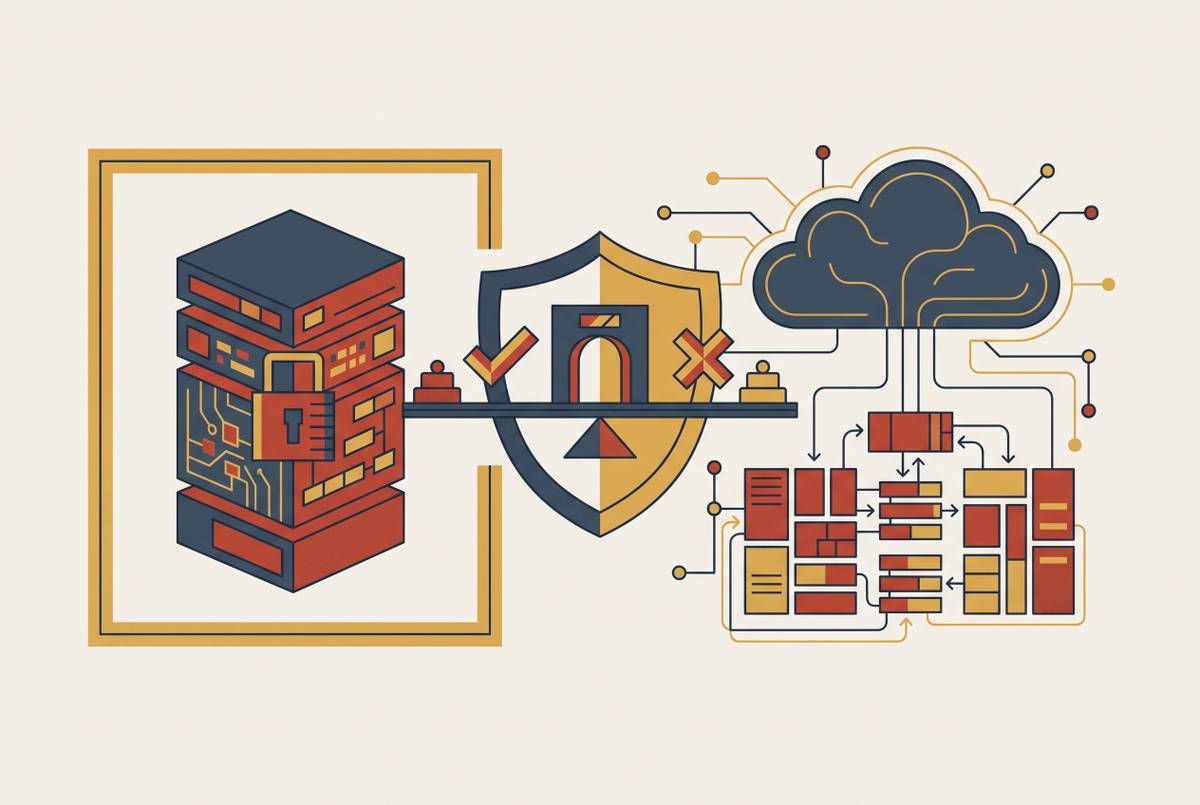
PR approval gates agent behavior only when platform controls enforce configuration limits.
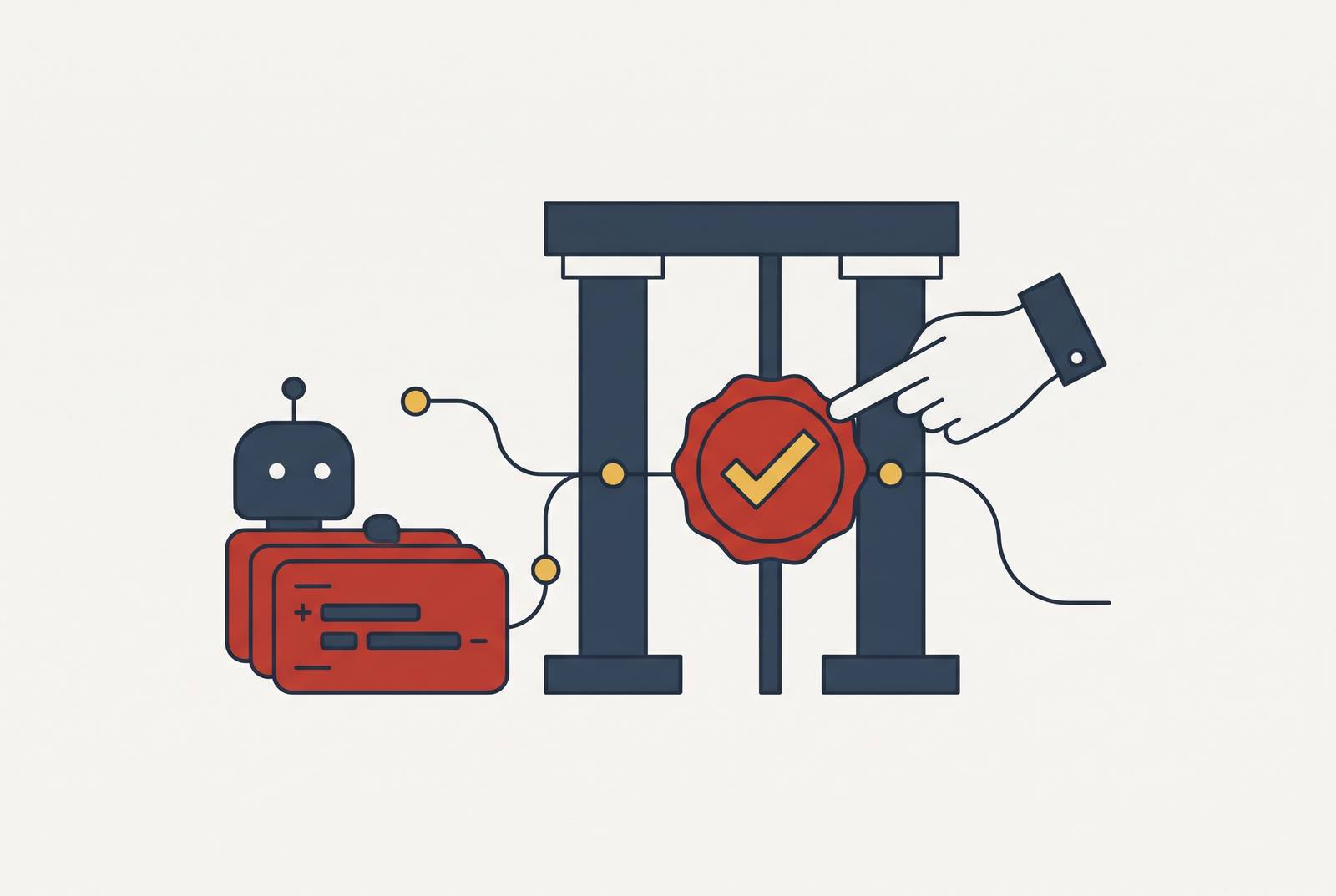
Agents-as-code means defining AI agents in configuration files stored in Git, so changes to their scope, identity, and spending limits pass through pull requests and code review. Pull request approval is a binding authorization gate for changes to agent behavior only when platform controls enforce those definitions. Configuration records what humans authorize. Branch protection, isolated execution, and scoped credentials prevent the agent from exceeding that authority.
Why the pull request became the authority boundary for agentic code changes
Coding agents have privileged access as they automate work inside the software supply chain. They open pull requests, fix failing tests, upgrade dependencies, and refactor across repositories. The structural change is where their authority must end. An agent can create a branch and propose a change, but it cannot push to a protected branch or merge its own work.
That division is a permission boundary. The platform that protects the branch must also constrain the agent’s identity. Otherwise, a request to stop at the PR is merely an instruction issued to an actor that retains permission to proceed. The agent cannot enforce its own final limit. A binding gate places that limit outside anything the agent can modify.
Why agent-generated PRs feel safer to approve than they actually are
The January 2026 study “More Code, Less Reuse” found that agent-generated code introduces more redundancy than human-written code, allowing technical debt to accumulate even as reviewers report feeling better about approving it. Confidence and risk move in opposite directions. That combination weakens review precisely where stronger scrutiny is needed.
The pattern is strongest for contributors who have no prior code ownership, which reverses the traditional open-source expectation that newcomers get the closest scrutiny. Agent-authored PRs that contain tests are significantly larger and take longer to turn around, but they merge at roughly the same rates. Tests do not establish that review was thorough. Nor does a reviewer’s comfort establish that duplicated logic or other latent problems have been examined. Because reviewers can feel less concern when risk is higher, governance must rely on rules that are enforced, without waiting for reviewers to feel uneasy.
The four conditions that make an agent genuinely governed at the PR boundary
A governed coding agent satisfies four conditions simultaneously. It has a distinct identity, its write authority stops at the PR, human merge and release gates apply without bypass, and every change is traceable to the person who requested it. These conditions form a system in which failure in one can invalidate the others.
Distinct machine identity separates agent work from a developer’s own changes. Scoped repository access and a recorded human requester connect the person, request, agent actions, and commits. Yet identity alone does not restrict authority. An agent listed as a branch-protection exception can still cross the boundary that its separate identity was meant to make enforceable.
The same dependency applies after approval. Merge and release controls must preserve the connection between approved code and the artifact that ships, while traceability must retain the model, prompt version, actions, approver, build, and reachable credentials. Missing provenance breaks that chain even if every approval was valid. Governance therefore requires both restricted authority and evidence of how that authority was exercised.
How to configure branch protection so the gate actually holds
Branch protection must have rules that explicitly cover the agent’s identity. The bypass list is the most common gap. An app granted an exception during a proof of concept can retain permission to push or merge without approval after the trial ends. The configuration must also exclude the agent from identities whose approvals count, preventing it from opening a PR and satisfying its own review requirement.
newmo established a concrete policy in April 2025. The Japanese startup combined a GitHub Actions workflow with a branch-protection status check requiring two human approvers on every Devin-opened PR.
Workflow files, CI configuration, and infrastructure code need a separate required-review gate from a named group. A workflow edit can change what executes with pipeline secrets. Agent-specific rulesets can layer stricter protection over existing rules because the most restrictive version of a conflicting rule applies. The rollout principle is equally concrete. Access should widen one rung at a time, with each rung tested by attempts to break its restrictions before the next is granted.
Risk-tiered approval: matching review depth to the scope of what an agent touched
Requiring human review for every change creates alert fatigue when agents make more changes than reviewers can check carefully. Risk-tiered approval addresses that constraint by routing changes according to the trust boundaries they cross. Volume alone is not the deciding factor. Narrow PRs are easier to review, but a small workflow edit can need closer review than a larger change that only touches application logic.
The lowest tier permits automated merge for dependency patches that pass a fixed check set, contain no workflow changes, and introduce no cross-service calls, with provenance recorded. Application changes that stay within a single service boundary need one human reviewer chosen by code ownership. The highest tier covers workflow files, CI configuration, infrastructure code, secrets-adjacent files, and cross-service migrations. It requires a named reviewer group, a separate ruleset, and exclusion of agent approval.
Prompt injection makes that highest tier non-negotiable. A sentence planted in a README, issue comment, or package description can attempt to redirect an agent toward credentials or privileged workflows. Even the lowest tier needs human judgment, because people must set the automated merge rules and audit them from time to time.
How do AI agent definitions in YAML and Git relate to enforcement?
Agents-as-code separates an agent’s intended behavior from the mechanisms that run and constrain it, much as Terraform configurations did for cloud infrastructure. YAML definitions stored in Git make scope, identity, and limits readable, reviewable, and version-controlled. Files that guide behavior, such as AGENTS.md and other agent instruction files, also need review. An overly permissive change can expand the scope the agent is instructed to pursue.
Description is not enforcement, however. Natural-language instructions can be followed imperfectly or manipulated, so they cannot substitute for restrictions on sensitive actions. Branch protection, CI gates, sandboxing, secrets scanning, and infrastructure policies enforce the authorized scope. Reviewing configuration through PRs governs changes to intent, while controls outside the agent constrain what it can actually do.
Sandbox and credential design that makes the PR gate structurally enforceable
An agent is especially open to attack when it has access to private data, reads untrusted content, and can communicate with the outside world. Removing any one breaks that attack chain. For repository changes, the PR gate confines what can enter the protected branch, while sandbox and credential controls must address access and communication during execution.
Endor Labs describes the central local-versus-cloud tradeoff in terms of credentials and isolation. Local agents run with the developer’s credential surface, including shell secrets, environment variables, and SSH keys. Managed, ephemeral cloud containers instead use credentials minted for the session, scoped to the task, and revoked when execution ends. Local execution favors real-time interaction. For production workflows, reproducible isolation and auditability provide the stronger governance case.
Endor Labs identifies enforcement points including EDR and XDR, sandboxes and containers, AI and MCP gateways, in-agent hooks, package firewalls, and secrets scanning and PR controls. It identifies hooks as the deterministic control between intent and action. These controls work alongside branch protection, which is still needed, and keep credentials and execution permissions from opening a way around the gate.
What the audit trail must capture for the PR gate to be accountable after the fact
A valid approval is only part of the evidence. The audit record must join the human requester to the agent session and resulting commit or PR, preserving files read, tools called, and commands run in sequence. It must also record the model and prompt version, who approved the merge and when, the artifact and build that shipped, and the credentials the agent could reach during execution.
AgentLens illustrates the event-recording side of this requirement. Its MCP-native audit platform records LLM calls, tool invocations, and decisions in an append-only, SHA-256 hash-chained, verifiable event log. sofagent illustrates commit-time checking instead. It evaluates git diffs and any available task log against a defined rule set, with a subset enabled by default, and records results in local hash-chained history with optional HMAC signing.
The SLSA framework progresses from documented build provenance at L1 to hosted builds with signed provenance at L2 and hardened builds isolating signing secrets at L3. After an incident, this evidence connects the production artifact to the build, agent session, and person who initiated the work. Without that connection, the failure cannot be reliably identified and repaired.
Cost as a governance lever at the PR gate, not an afterthought
Uncontrolled spending is another form of unauthorized expansion. With consumption-based pricing, agent costs vary with use, and a lack of detail in token billing can make it hard to predict or cap spending. A coding task also consumes more than a single model exchange. Tools, MCP servers, reasoning, subagents, retries, and refinements all contribute to consumption, with retry loops and runaway workflows creating particular exposure.
Task-level token or spend limits constrain autonomous execution, while excessive retries or tool attempts trigger a stop condition. Bloated context windows and missing feedback mechanisms are problems in the configuration, even when they look like unfortunate patterns of use. Checking spending after the work is done does not keep it within the authorized limit.
The agents-as-code model gives these controls a reviewable home. Spend limits belong in the same configuration that defines the agent’s scope and identity, versioned and approved through the same process. Enforcement must cover the session, developer, and time period, placing cost control at the governance layer with branch protection and sandbox scope.
The strongest objection to the PR gate — and the precise answer to it
Agent PRs are reviewed and merged more quickly, with less commentary, and a large majority of agent-involved merges receive no human comment. That finding deserves a direct concession. A nominal human checkpoint does not establish substantive scrutiny, and requiring it for a narrow, predictable change can add friction without meaningful signal.
A dependency patch passing fixed checks can therefore be a candidate for automated merge with release provenance preserved. It moves authorization into a rule set that humans define, audit, and update as conditions change.
The response to social erosion is written policy: repository-controlled rules must state which changes require human review, which qualify for automation, and what checks govern that automation. Those rules themselves pass through review and approval, while branch protection enforces their effect. The PR gate remains binding because the agent cannot rewrite the conditions under which its work is accepted.
What a production-ready PR gate configuration looks like end to end
A production-ready implementation begins with a distinct machine identity scoped to the required repositories and a human requester recorded on every run. It does not use a personal or shared token. The agent executes in an isolated container with task-scoped credentials minted at session start and revoked at completion. This makes the run’s identity and access boundaries explicit before any code is proposed.
At the repository boundary, agent-specific protection layers over existing rules without adding the agent to a bypass list. Its approval cannot satisfy merge requirements. Risk routing then applies the approved policy, allowing qualified dependency patches through automated checks, assigning single-service changes to a human code owner, and reserving sensitive paths for a named reviewer group. Scope limits keep proposed changes narrow enough for reviewers to check.
The configuration and evidence must survive the session. Version-controlled configuration defines task-level cost limits, while written policy governs review classes and automation. An append-only audit record preserves actions and diffs, joining them to the requester, model, prompt version, approval, and shipped build. A missed bypass entry or uncontrolled retry loop is a flaw in the configuration that still falls under governance. The decisive test comes after an incident, when the system must explain what happened, who requested it, and what the agent could reach.