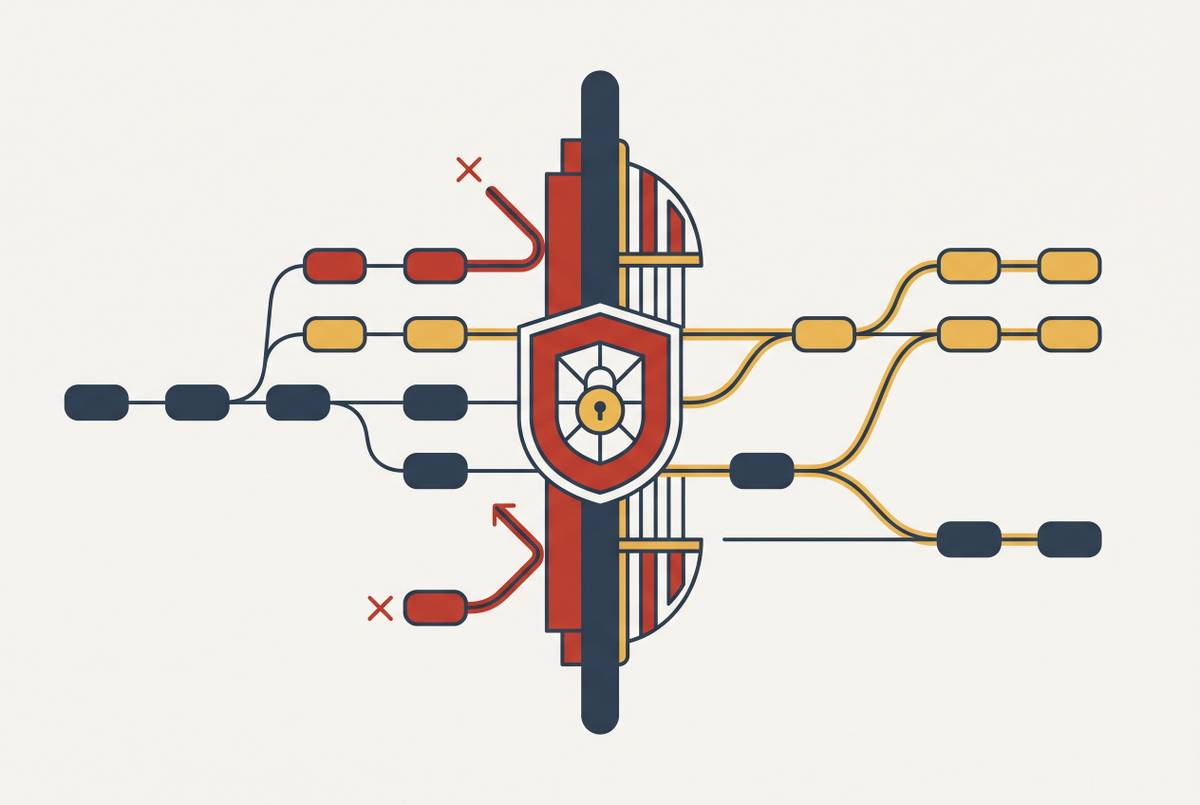
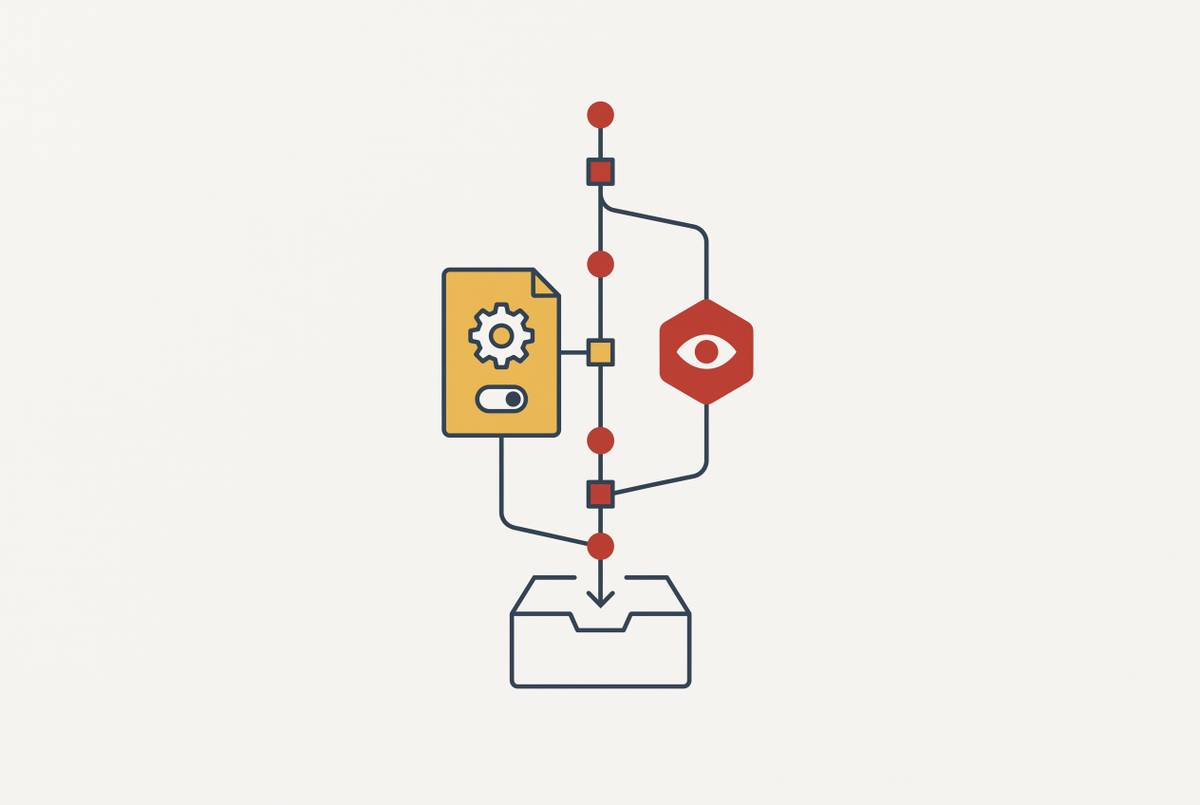
Declarative Agent Definitions as the Atomic Unit of Governance Accountability
Versioned agent definitions make authorization reviewable.
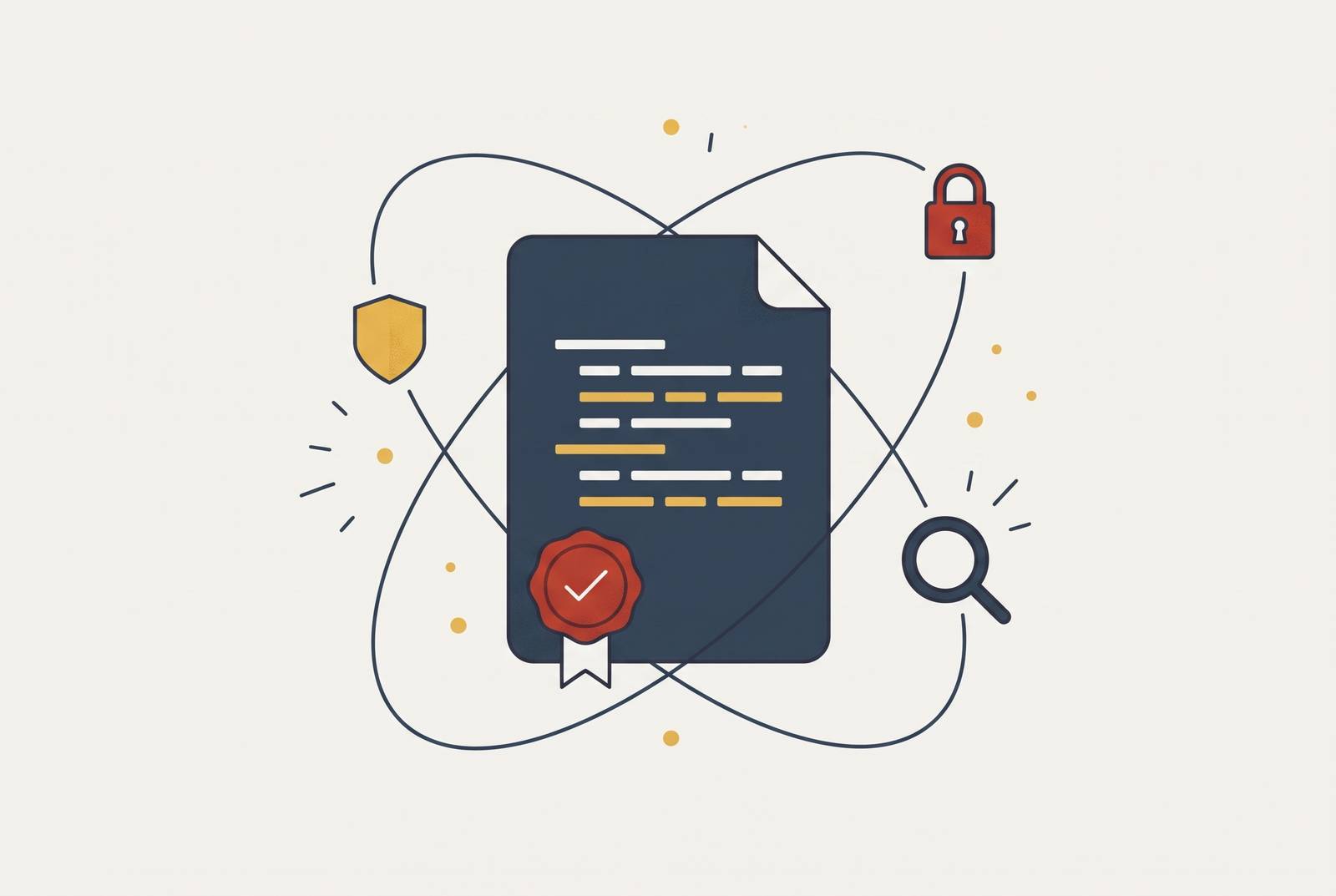
Agents-as-code means defining AI coding agents in version-controlled YAML files in Git, so their identity, permissions, tools, models, triggers, and budget limits pass through normal code review. The definition becomes the atomic unit of governance accountability because it records who authorized the agent to do what. That authorization becomes binding only when the execution platform enforces it.
Why agents running unattended change the accountability problem entirely
The promise of unattended agents is that “the system keeps acting when the user stops watching.” The problem begins at precisely that point. Reviewing outputs can govern a prompt-and-respond interaction, but it cannot govern an agent that chains tool calls and changes external state before anyone reviews the result. The infrastructure that runs the agent must take over verification from the people watching it.
Shi and DiFranzo call this the “reduced-supervision paradox.” As stepwise supervision recedes, the infrastructure must define authority, record actions, interrupt execution, and support recovery. An agent editing repository files, submitting forms, or modifying shared records can cross organizational boundaries faster than permissions travel. The harness around the agent therefore becomes the accountability layer.
What declarative agents are and why their constraint is the point
NHI Mgmt Group defines a declarative agent as one that follows predefined rules and explicit instructions to complete a bounded task. Instead of receiving a broad objective and choosing an open-ended course, the agent receives a desired state with permitted execution paths narrowed around it. Security teams can then work out which actions to forbid, which exceptions need review, and which outputs to accept before the agent runs.
Constraint makes the agent’s authority explicit, trading some creative freedom for predictability in repeatable engineering work such as dependency upgrades, test backfill, lint fixes, migration sweeps, and CI triage. But gaps in the rules, unclear instructions, and too many privileges can still cause harm. A declarative agent is auditable by design only to the extent that its task and policy are specified clearly. Less autonomy is not a safety guarantee.
How do AI agent definitions stored in Git become an authorization contract?
A versioned YAML definition is the contract between an agent and the organization authorizing it. Its identity, permissions, tools, model, triggers, and budget limits establish the boundary between intended work and permitted execution. YAML frontmatter can express triggers, permissions, tools, safe output limits, and engine configuration before the first tool call. The file gives authorization a concrete address.
Git connects that artifact to existing engineering accountability. With definition changes subject to pull-request review, a change in scope, model, or permissions produces a diff, an approval record, and an attributable history. YAML itself supplies no special protection.
NHI Mgmt Group frames declarative agents as a policy boundary between instructions and executed actions. Aligning those rules with credential scope makes agents easier to inventory and constrain. That alignment is the structural requirement. Logs can preserve evidence of execution, but the approved definition establishes what the organization permitted before execution began.
The four governance controls that only work when the definition file exists
Audit trails need an authorization anchor. Their identity record must connect the user, agent version, and specific tool identity, while delegation records must preserve originating identity, transferred permissions, scope, and duration constraints. Without a defined agent identity, those records cannot show which approved policy applied to the action. Regulated engineering teams also need evidence of the model used, repository context retrieved, files edited, tests run, developer approval, whether code left the environment, and the policy governing the session.
Credentials minted for each session can match the definition’s permissions and be revoked when the run ends. A generic service account instead provides no dedicated boundary between the task and its privileges. Without a declaration for the task, access tends to cover what the agent might do, beyond what it is allowed to do.
Cost caps must also be set before the agent runs. The notes’ contrast between a runaway incident with and without enforcement is roughly two orders of magnitude in cost. Hard token or dollar limits must apply at session, developer, and time-period levels because unattended warnings depend on an absent reader. Model routing also helps control the budget, since the cost of the reference task varies roughly sevenfold across model classes. Declaring which class handles each task tier makes that choice reviewable.
Change history governs the evolution of all three controls. A scope or permission change must be attributable to a person, a reason, and a point in time. Git records what changed, while the pull-request review records why it changed and who approved it. The Agent Infrastructure as Code pattern brings this policy into CI/CD, so repository files, review, and deployment pipelines govern what the agent does.
What external regulators and standards bodies are now requiring — and why the definition file satisfies it
NIST’s Center for AI Standards and Innovation started its AI Agent Standards Initiative in February 2026. The related NCCoE concept paper describes agents that are treated as generic service accounts and lack their own identity, authorization, or accountability controls. That diagnosis matches the engineering gap directly. A versioned definition supplies a reviewable identity and authorization boundary that an enforcement system can act on.
The 2026 Singapore Consensus on Global AI Safety Research Priorities proposes ten foundational principles spanning the agentic AI lifecycle, including traceable identity, auditability, least privilege, and interruptibility. These are properties that declared policy and its runtime enforcement can support together. They are not properties of YAML syntax alone. In particular, declaring an interruption policy does not itself make a running agent interruptible.
KPMG’s January 2026 Q4 2025 AI Pulse Survey found that a large majority of U.S.-based C-suite and business leaders at large organizations say security, compliance, and auditability are essential when they deploy agents. These frameworks and priorities validate the definition-file pattern without establishing a universal YAML mandate. The compliance contribution is evidence of verifiable identity, scoped authorization, auditable history, and revocability.
The gap between observability and accountability, and why a definition file closes it
Observability establishes what happened, while accountability asks whether the action was authorized and who can answer for it. Monitoring is necessary for both questions, but insufficient for the second. Shi and DiFranzo’s 63-artifact audit found tool mediation and monitoring traces clearly visible in most artifacts. Checkpoint placement was clearly visible in only 6, validator independence in 4, recovery in 2, and contestability in 1.
A repository can preserve rich diffs after a consequential change, while a browser can cross organizational boundaries before authority is resolved. A service can follow policy yet leave affected people without recourse. Each path can leave evidence while giving people no real way to step in, judge what happened independently, recover, or challenge the action.
When an agent accesses a system, modifies a file, or consumes a budget, its session must connect to the version that permitted those actions. The logs then document execution against that authority rather than inviting someone to reconstruct intent afterward. Sandbox policy needs the same treatment because filesystem scope, network egress, and process limits are governance boundaries only when their constraints are declared and attributable.
What breaks when agents run without a definition file — including cost, production failure, and the accountability gap
Runaway cost exposes the absence of enforceable policy quickly. Without a declared budget and a runtime that enforces it, the incident can use up resources while warnings wait for someone to read them. The resulting post-mortem must explain not only spending but the authority under which it occurred. A spending trace cannot show who approved the spending if that approval chain is missing.
Production deployment reveals a broader operational weakness. A large majority of enterprise agent pilots never reach production, and Gartner predicts that agentic AI projects will be canceled by 2027 because their business value is unclear and their risk controls fall short. Multi-agent orchestration complexity compounds that transition. Declarative definitions make scope and policy reviewable as configuration, although they do not by themselves resolve business value or orchestration problems.
In provider-managed environments, platform teams must put independent observability and enforcement at the boundaries they control. If those boundaries remain undeclared, the team can be responsible for production impact from a workload it cannot fully inspect. As of April 2026, only roughly a third of organizations have a named person accountable for agent behavior. An owned, versioned definition makes authorization attributable instead of leaving responsibility to be assigned after an incident.
The managed-versus-local question, and what it means for definition-file governance
Where the agent runs determines who controls the enforcement boundary. Local runners can keep data local, while harnesses built into development environments generally expect a developer to be present in an interactive session and work poorly in unattended production infrastructure. Storing a definition locally leaves that mismatch in place. The relevant distinction is whether the runner can enforce declared policy throughout an unattended session.
A self-hosted harness using a commercial LLM API combines infrastructure control with vendor-grade model quality. The team still manages its isolation boundary and can inspect it independently. The team must therefore build the enforcement layer that puts the declared permissions, sandbox scope, and budgets into effect as limits. Control of infrastructure also means responsibility for implementing the contract.
Managed cloud platforms provide the strongest integrated guarantee when they enforce the definition directly. In that model, the file determines session credentials, sandbox configuration, and audit attribution to the approved version, which is the job Ellipsis, a cloud agent platform built to run Claude Code and Codex in production rather than just hand them a VM, was designed to do. The operative word is “enforce,” not “managed.” Regulated teams need the full chain of evidence for a session, so they must check that a platform links authorization to execution, beyond checking that it accepts YAML.
The objection that a definition file describes intent, not execution — and what it actually implies
A definition describes intent, leaving execution to runtime enforcement. That objection is correct, and harmful actions can follow from an approved but poorly designed rule set. In declarative systems, the failure may be excessive permission or ambiguous instruction. Reviewability makes those flaws examinable.
The file is therefore an authorization artifact. The platform must read it and enforce its limits, the sandbox must implement filesystem and network scope, and the credential system must grant only declared access. Shi and DiFranzo’s harness concept locates executable authority in this surrounding infrastructure.
For engineering teams, the implication is to apply application-code rigor to definitions. They require review, testing, change management, named ownership, and security review before production deployment. Those practices address the quality of the authorization, while enforcement addresses obedience to it.
What a mature definition-file governance posture looks like in practice
A mature implementation begins with bounded tasks and machine-checkable completion criteria. Dependency upgrades, test backfill, lint and type-error fixes, migration sweeps, and failing-build triage fit that model. Open-ended feature work does not fit unattended CI because ambiguity can require clarification from an unavailable human. Task selection establishes what the definition can meaningfully authorize.
The definition then records triggers, permissions, tools, model routing, hard budget caps, and sandbox policy. A named team owns the file in Git, and scope, model, or permission changes pass through a pull request with a reviewer and recorded reason. Security review precedes production deployment.
When the agent runs, the platform mints session-scoped credentials for the access that has been declared, without adding access it might need. It implements sandbox boundaries and terminates the session at its budget cap, logging the reason against the definition version. Every tool call, diff, and token connects to the session and its authorizing version. When an action is questioned, the organization can follow that chain from the approved definition and merged pull request to the execution record, and answer who authorized what.