Infrastructure Requirements That Must Exist Before Agent Governance Policies Can Be Enforced in Production
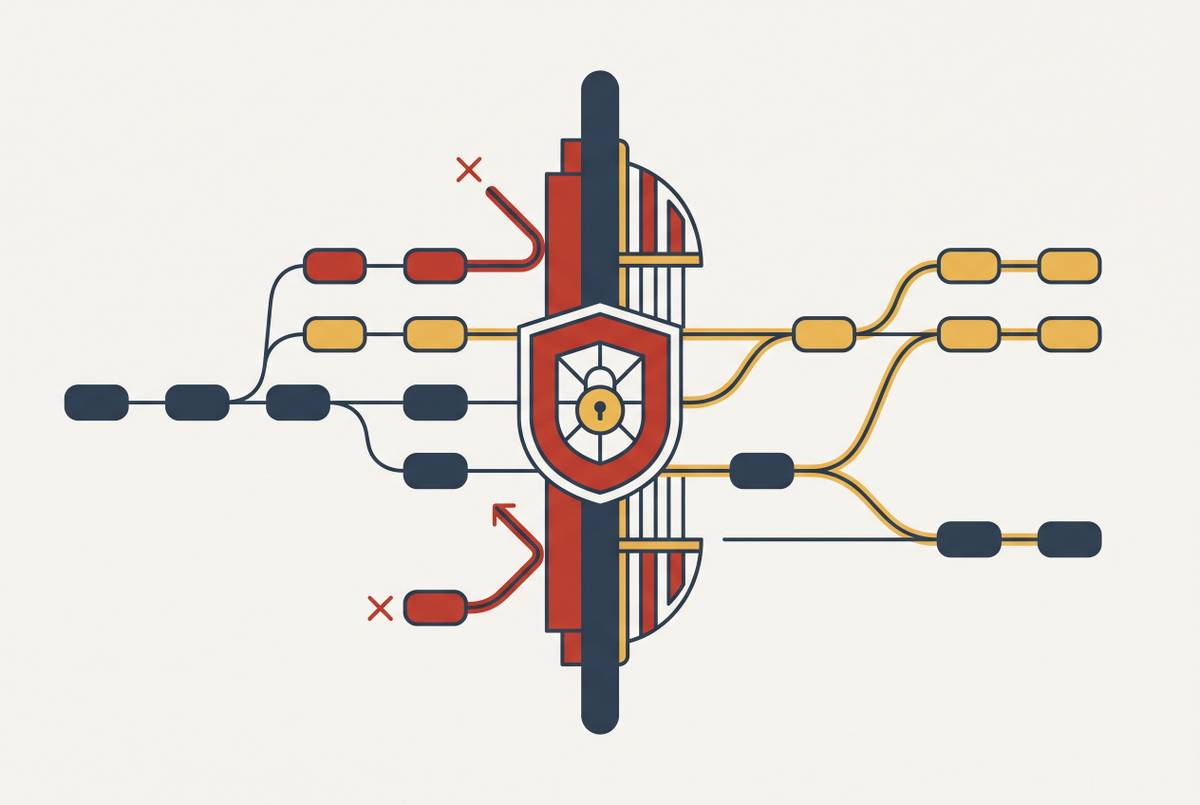
Agent governance only works when infrastructure enforces it.

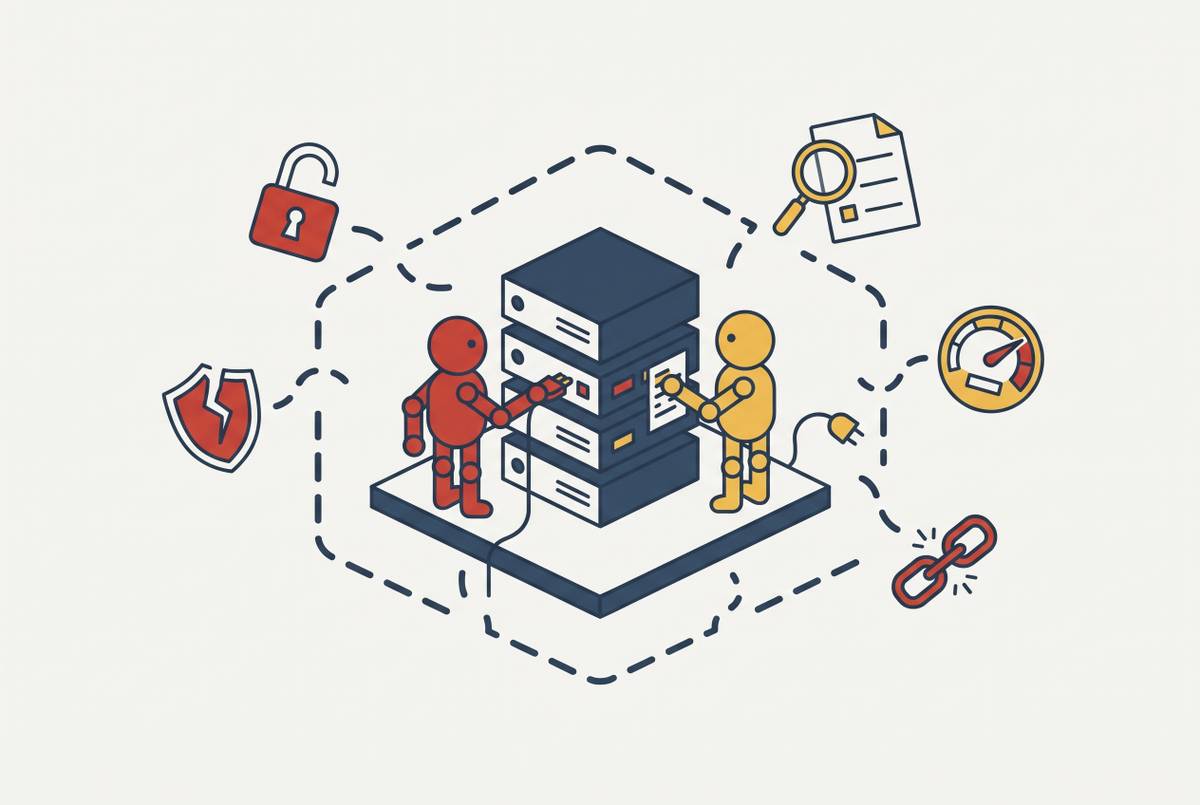
Running coding agents at team scale requires more than choosing the agents or a managed cloud platform. Production governance depends on infrastructure that enforces identity, access, isolation, configuration, audit evidence, and budgets outside the model. A platform is suitable only if those controls can stop prohibited actions as well as describe or report them.
Why governance policies fail without infrastructure to enforce them
Writing a governance policy does not create the mechanism that enforces it. A prompt rule can reduce the probability of a bad action, but it cannot prevent one. To prevent an action, infrastructure must intercept execution before it happens.
This distinction becomes decisive when agents move from experiments into production. The same agent doing the same task may take different execution paths from one run to the next, so controls cannot count on it making decisions in a set order. They must attach to the execution environment instead. Each infrastructure primitive therefore closes a different enforcement gap, from identifying the actor to stopping an unaffordable request. Teams that treat tool selection as the whole deployment decision leave those gaps unresolved, even when the agent performs its task well.
Why agent identity is the first enforcement chokepoint
Every access rule needs an identifiable subject. The system must know which agent is acting, whose authority it is using, and what that authority permits. Otherwise, it cannot reliably connect a restriction to the request being evaluated. Identity is therefore the first enforcement chokepoint. Authentication and authorization provide the point at which policy, access scope, and audit attribution meet.
Northflank’s enterprise deployment guide requires every agent session to map to a named human identity, with SSO configured before other deployment work. That mapping makes access reviews and offboarding possible without reconstructing ownership by hand. The guide also calls for agent PRs to identify the tool and session ID, using a tool label such as agent:claude-code. Security operations can then pivot from a PR to its originating session in the SIEM. Attribution must survive beyond the initial login event.
That requirement goes beyond static IAM and retrospective logs. An identity system must support task-scoped authorization and runtime policy enforcement because an authenticated agent can continue making consequential requests throughout a session. SSO alone does not define those permissions. Although identity mapping adds workflow friction, omitting it leaves access reviews and offboarding dependent on manual guesswork. The next requirement is to translate that attributable identity into credentials whose authority matches the task.
Scoped, ephemeral credentials as the enforcement mechanism for access policy
A policy limiting an agent to task-relevant repositories is enforceable only when its credentials impose the same restriction. The credential must also expire when the session ends. Otherwise, the policy describes a narrower permission set than the agent actually holds. This mismatch commonly begins during prototyping, when broad access makes a demonstration easier. If those grants stay in production for months or years, writing a new policy will not narrow them.
The minimum credential architecture starts with credentials minted fresh at session start and scoped to the task. It ends with automatic revocation on completion. Scheduled rotation is not a substitute for revocation because it does not tie the end of access to the end of the work. Shared or long-lived secrets must not be passed to the agent at runtime. These requirements make the credential itself enforce both the permitted resources and the duration of access.
Unreviewed community MCP servers and plugins connected to production credentials expose the same gap through another route. A policy may ban that connection, but broad credentials still give it the authority to act. Credential scoping limits what those integrations can access under the agent’s authorization. It does not, however, isolate the process using them. A shared execution environment can expose resources outside the boundary that credential policy was intended to establish.
Execution isolation as the boundary that makes policy containment real
Scoped credentials define what an agent is authorized to reach, while execution isolation limits what it can physically reach. Both boundaries must exist in production. An agent that executes shell commands, installs packages, reads files, and makes network requests needs containment around the workload itself. Without it, a misconfiguration can expose the host system, other teams’ infrastructure, or sensitive data stores. Authorization alone does not supply that containment.
In an incident on a managed cloud platform, the boundary failed to stop a single API call from deleting a production database and all volume-level backups. Production resources need an enforcement boundary that an agent’s execution path cannot bypass simply by taking a prohibited action.
The deployment guide identifies microVM isolation with a dedicated kernel per agent workload as the baseline for production deployments handling proprietary code. Each run should have a fresh, isolated environment of its own, kept off shared CI infrastructure, with limits on network egress. A CI pattern that works alongside this gives the agent job only read permissions and no deploy secrets, while a separate job handles writes only after a human has approved them. These boundaries separate execution from authority to change production. MicroVM isolation introduces cold-start latency, but shared-kernel containers do not provide the same dedicated-kernel containment.
Declarative, version-controlled agent configuration as the prerequisite for reproducible policy
Runtime boundaries are insufficient if every invocation configures them differently. When sandbox profiles, permission scopes, network allowlists, and cost limits vary by launch, there is no stable definition against which to assess enforcement. An access review cannot check a setting that has never been spelled out. Nor can an audit reliably establish which controls were intended when those controls depend on whoever started the agent remembering the right options. Reproducible governance requires a declared configuration.
The agents-as-code pattern places those parameters in version-controlled YAML files checked into the repository. The sandbox profile becomes a reviewed definition. Permission scope becomes explicit, and the configured cost limit becomes part of the agent’s definition. Changes to those controls must go through code review so they cannot override the approved configuration without anyone knowing. The file establishes the rule that runtime infrastructure must enforce.
Version control also gives policy inheritance a set of rules to draw on. Configuration for a team or organization can set baseline requirements that each agent’s configuration inherits and builds on without dropping controls without anyone knowing. This is the governance value of declarative configuration. As with infrastructure-as-code, the reviewable artifact replaces manually assembled state as the reference for what should run. It makes the intended boundaries reproducible across runs and teams.
Audit-ready logging as the infrastructure that makes compliance claims answerable
A reviewed configuration establishes intent, but it does not prove what happened during execution. A regulator, security team, or incident reviewer needs structured evidence of the agent’s actions on the date in question. Reconstructed conversations cannot provide that evidence reliably. Logs must connect activity to an attributable session and remain available for the required retention period.
The deployment guide calls for every file access, shell command, PR creation, and API call to flow into the enterprise SIEM. Each agent run should be treated as a distributed trace, with stable trace IDs and spans for planning, LLM invocation, tool calls, and retrieval steps. That structure connects individual events into an inspectable run. Even when events were recorded, the compliance gap stays open if the logs are unstructured, are kept for too little time, or lack a SIEM connection. Logs must be kept for as long as the applicable compliance framework requires.
Production logging should default to metadata only. Full prompt and tool content should be explicitly enabled, short-lived, access-controlled, and aggressively redacted, with full payloads stored as encrypted blobs with TTL. For finance, healthcare, and insurance workflows, PII redaction must happen before storage.
CSA and Strata Identity’s report published in February 2026 found that a large majority of security leaders doubted they could pass an audit focused on agent behavior or access controls. Secret scanning adds a preventive gate to this evidence layer because AI coding agents commit credentials more often than human developers. Pre-receive hooks or required status checks must block merges when they find secrets. Recording the exposure after a merge would not enforce the prohibition.
Budget enforcement infrastructure as a prerequisite for cost governance, not cost visibility
Cost monitoring reports what was spent after the charge, while cost enforcement decides whether execution can go on. An alert cannot reverse an API charge. The enforcement mechanism must intercept execution before the next API call and terminate the session when the budget limit is reached. This matters because agentic workflows use far more tokens per task than standard chat interactions. Multi-agent architectures compound that consumption, making unconstrained execution a production cost risk.
The gateway is the required budget enforcement point. If the limit exists only in application logic, the agent can in principle exceed it. When the gateway enforces the limit on requests passing through it, the agent cannot bypass that control through its own application behavior. Enforcement at this layer is agent-framework-agnostic rather than dependent on each framework implementing its own restraint. A configuration file may declare the budget, but the gateway must apply it.
The required controls operate at five layers, including per-request limits, per-session rolling budgets, per-key monthly caps, model-tier routing, and circuit breakers. Request, session, and key limits constrain spending at different scopes. Model-tier routing directs tasks to cheaper models when they do not require the most capable one. Circuit breakers end sessions when they breach a limit, going beyond sending alerts. Together, these mechanisms turn a cost threshold into an execution constraint rather than an expectation that agents or developers will self-limit.
The enforcement checklist — mapping each infrastructure primitive to the governance gap it closes
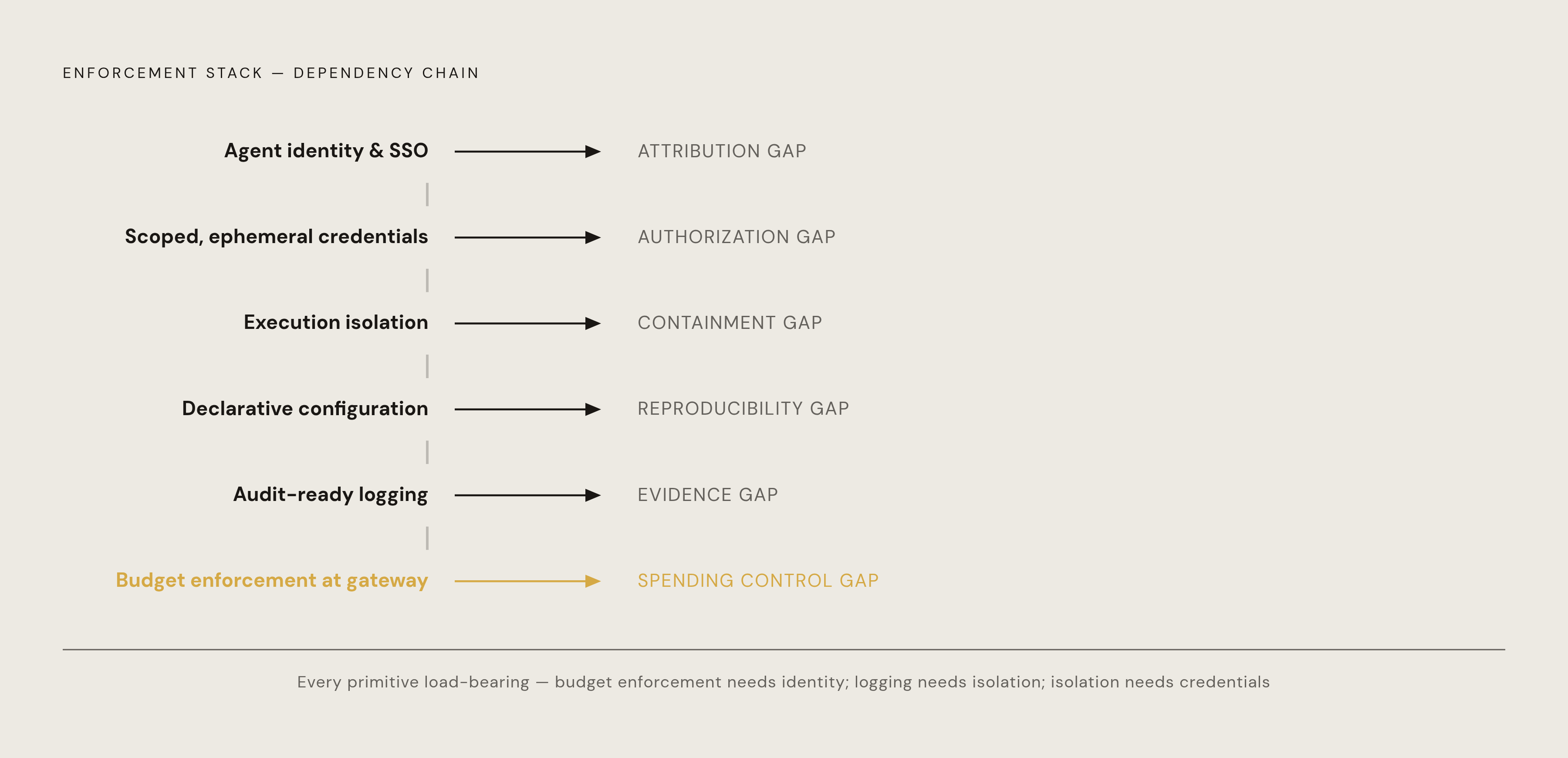
The readiness check follows the dependency order of the controls. Engineering teams should establish these prerequisites before writing governance rules with confidence that production will enforce them. Each check must name the gap and spell out what is needed to close it. A policy document cannot stand in for either. For a managed platform supporting coding agents, these are deployment criteria.
Agent identity and SSO close the attribution gap. They give governance rules a subject and connect activity to a person. Readiness requires every session to map to a named human identity, SSO before production access, and PR labels identifying the tool and session ID.
Scoped, ephemeral credentials close the authorization gap. They make task boundaries enforceable through the authority the agent actually holds. Readiness requires fresh credentials at session start, task-specific scope, automatic revocation at session end, and no shared or long-lived runtime secrets.
Execution isolation closes the containment gap. It limits reach beyond credential-level authorization. Readiness requires a microVM or equivalent boundary with a dedicated kernel per workload, restricted network egress, a fresh environment per run, and no shared CI infrastructure for agent execution.
Declarative configuration closes the reproducibility gap. It provides a reviewable definition of the controls intended for each run. Readiness requires the sandbox profile, permission scope, network allowlist, and cost limit in repository-managed YAML, with changes passing through code review and inherited baselines protected from silent removal.
Audit-ready logging closes the evidence gap. It makes governance claims answerable through retained, queryable records. Readiness requires SIEM-connected action logs, stable trace IDs, metadata-only defaults, PII redaction before storage, compliant retention, and secret scanning enforced at the PR gate.
Budget enforcement at the gateway closes the gap in controls on spending. It stops execution. Readiness requires per-request, per-session, and per-key limits, configured model-tier routing, and circuit breakers that terminate sessions on breach independently of the agent framework.
These dependencies also constrain what any single control can prove. Budget enforcement needs identity to tie spend to a person or trigger. Logging needs isolation to give a full record of what the agent could reach, while isolation needs scoped credentials to keep the agent from holding too much authority inside the sandbox. The deployment decision therefore rests on the full enforcement stack.