Recurring Engineering Tasks Suitable for AI Agent Automation
Verifiable success criteria, not complexity, determine what work belongs in an agent's hands.
The clearest signal that a recurring engineering task is ready for agent automation has nothing to do with how tedious it feels to a human. It comes down to structure: predictable inputs, success criteria that can be checked without a person watching every step, and a pattern that repeats often enough to reward the setup cost. This article maps the engineering tasks that meet that bar in 2026, from pull request review to dependency updates, and explains why verified completion, not task complexity, is the real test of what belongs in an agent's hands.
What Makes a Recurring Engineering Task a Good Candidate for Agent Automation
Agents no longer just answer a single prompt and stop. A modern coding agent pulls context from the repository, drafts a plan, edits files, runs tools, reads the output, and keeps iterating until it hits a defined stop condition. That wider loop is what makes delegation possible at all, and it also sets the bar for what's safe to delegate.
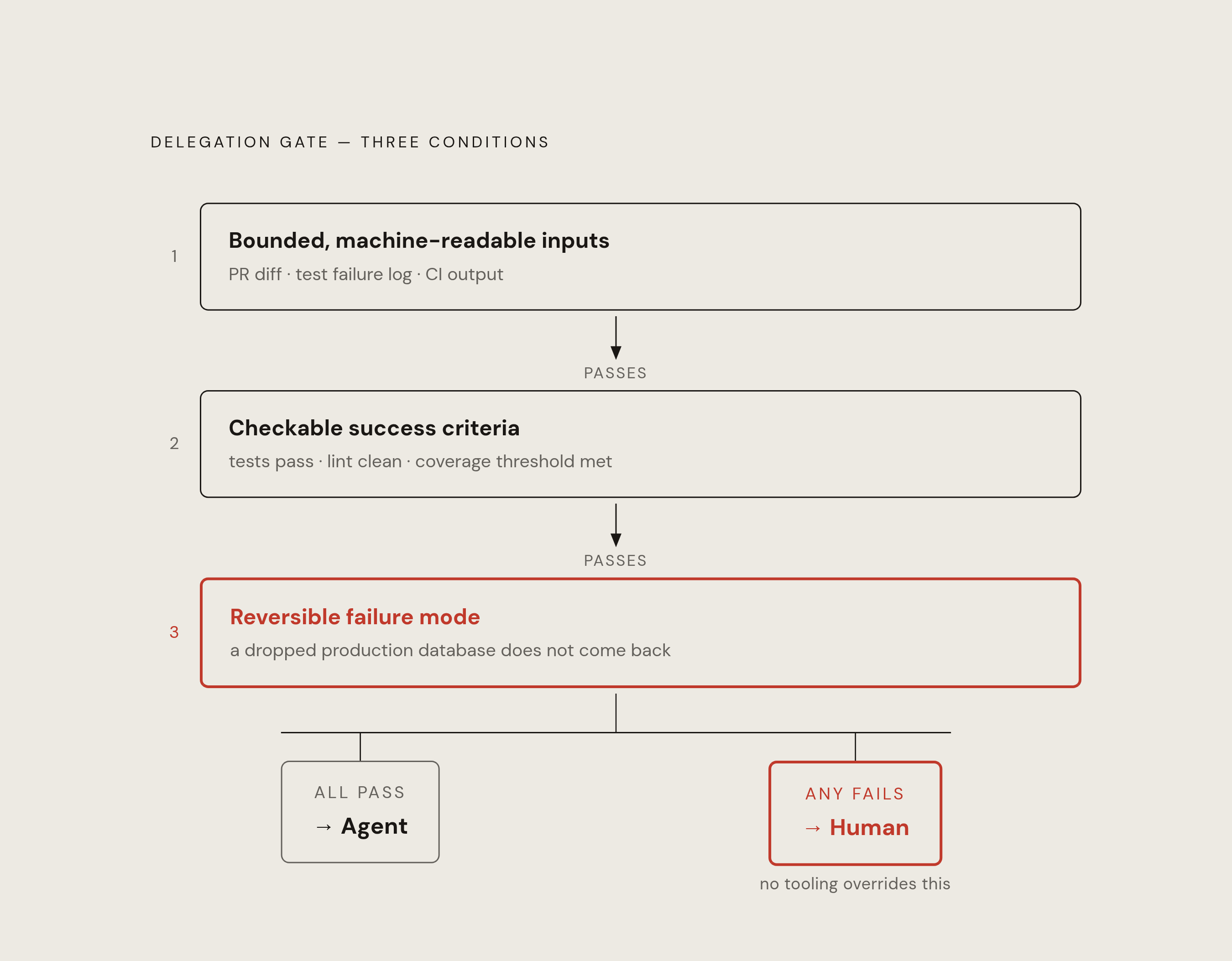
Three properties, taken together, decide whether a task fits that loop. First, the inputs have to be bounded and readable by a machine: a PR diff, a test failure log, a CI run's output. Second, success has to be checkable without a person weighing in at every step: tests pass, lint comes back clean, a coverage threshold is met. Third, the failure mode has to be reversible. A dropped production database does not come back.
Those three conditions draw the line that decides whether a task moves to an agent or stays with a person. Routine, reversible work moves to an agent. Architecture decisions, security-sensitive changes, product intent, and anything with consequences that can't be undone stay with a person who owns the outcome. When engineering teams reorganize their workflows around agents in 2026, they are, in effect, reorganizing roles around this exact boundary, not around which tasks look simple on paper.
That's also why autonomy by itself is not the goal. An agent turned loose without bounded, verifiable scope is a liability, not a productivity gain. The real test of whether a system is ready for production use is whether it knows when to stop and ask a human, not how much it can do unsupervised. Every task category that follows should be read against that standard.
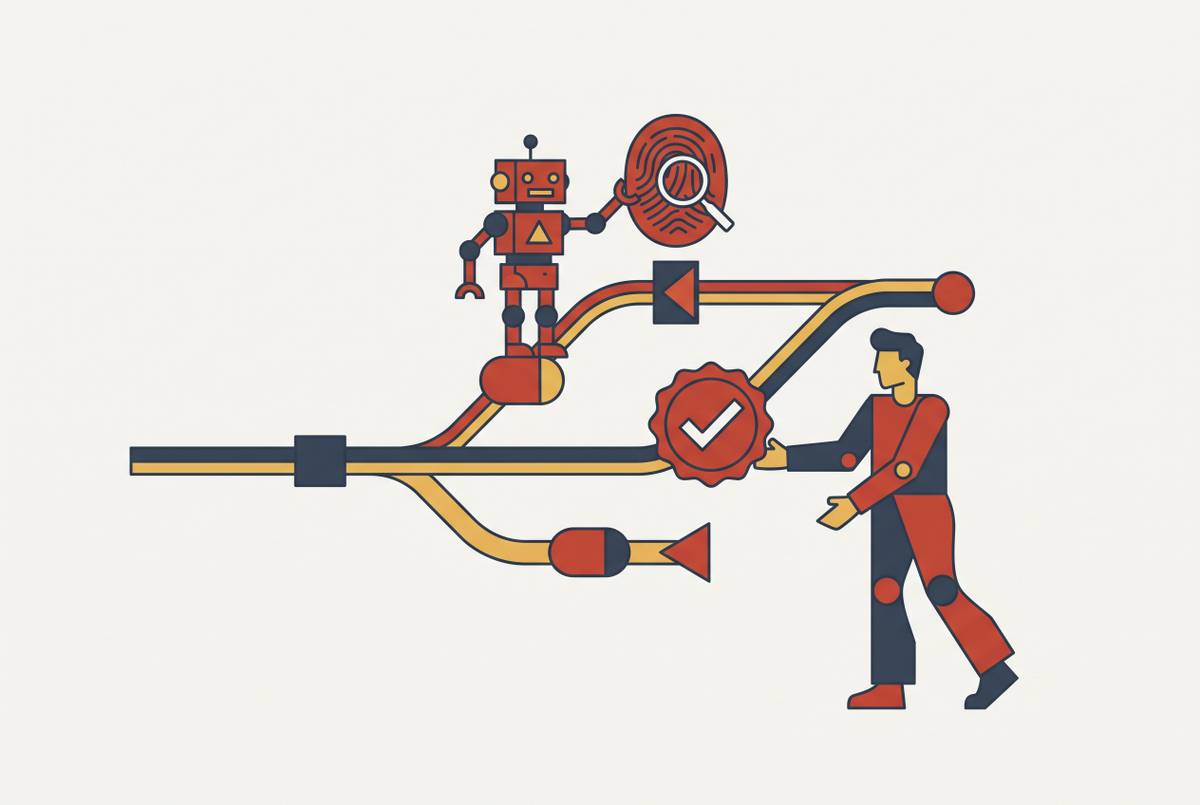
Pull request review as the earliest and most common delegation point
Code review is usually the first task teams hand to an agent, and the reason follows directly from the criteria above. The input, a diff, is bounded and already structured. The output, line-level comments, is easy to check. And the workflow already has a human approval gate sitting at the end of it, which caps the damage a bad suggestion can do.
In practice, the agent reads the diff, checks it against the repository's own conventions and existing test results, and flags style violations, likely regressions, missing tests, and common security anti-patterns. A wrong comment is cheap. The reviewer dismisses it and moves on, which is a different risk profile entirely from a wrong deployment.
Agents that write code also generate more code to review, and reviewing AI-generated output has become its own source of load on engineering teams. The net gain from automated review depends on scoping what the agent is allowed to touch, not on treating review as a solved problem the moment an agent is added to the pipeline. Research framing this workflow places code review suggestions in a shared model, where the agent reviews and the human decides whether the change is correct and safe to merge. That division of labor, with the agent surfacing issues and the human deciding, keeps the gate meaningful.
Test generation and coverage maintenance as high-volume, low-judgment work
Unit test generation fits the agent-ready profile even more cleanly than review does, because the success criterion, tests pass and a coverage threshold is met, can be checked entirely by machine. No one has to read the test and decide if it "feels right" before the pipeline can move forward.
The inputs are bounded in a useful way: the function signature, the existing test suite, and a coverage report that shows exactly which branches aren't exercised yet. From there, writing tests becomes a search problem with a clear stopping point, cover the uncovered branch, confirm it passes, move to the next one. An agent can run this task end to end without waiting on a person between steps.
Engineering frameworks built for 2026 workflows place unit tests and repetitive test generation squarely in the delegate column, with the human role limited to two specific checks: validating coverage, and separately, validating the important edge cases. An agent can run up the coverage number without ever touching the test that would have caught a real incident, so engineers still need to look for whether the business logic and the boundary conditions that matter are actually exercised, not just whether the percentage went up.
Novel business logic and regulatory edge cases sit outside this category for a reason: no coverage metric can tell you whether a test correctly captures a legal requirement or a domain-specific rule. Those tests still need a human author, because the thing that makes them correct can't be reduced to a number the agent can check against.
Documentation generation and code summarization as pure information-extraction tasks
Documentation work is a smaller category, but it belongs in the same taxonomy because the source of truth, the code itself, is bounded and already sitting right there. An agent doesn't need external input to summarize what a function does; it just needs to read the function.
What agents produce reliably here includes function-level docstrings, module-level README files, changelog entries pulled from commit history, and API reference pages generated from typed function signatures.
The failure mode is about as mild as engineering failure modes get. A wrong docstring gets caught in review and fixed. What an agent can't produce is the reasoning nobody wrote down: why a design decision was made, what regulatory constraint shaped a particular validation step. That context lives in a person's head or in a decision record somewhere else, not in the code, so no amount of code-reading will extract it.
Bug triage and log analysis as structured diagnosis tasks agents can run end-to-end
Bug triage and log analysis belong to a different category of work. Review, test generation, and documentation are authoring tasks. Triage is diagnosis: stack traces, CI failure output, and error logs are already machine-structured, so the job is pattern matching and extraction.
An agent working triage reads the failure log, searches the repository for the code path involved, cross-references recent commits that touched those files, and comes up with a ranked hypothesis about what caused the failure.
Log data is already formatted for exactly this kind of work. Atlassian's pilot of agents on issue-resolution workflows, a close analogue to triage, produced more than 500 merged pull requests over a 70-day production window with human-in-the-loop oversight at every merge. That's a meaningful data point for what structured diagnosis work can sustain at scale, not a claim that triage replaces the reviewer.
Confirmation still matters for a specific reason: the agent can tell you what changed and how it lines up with the failure, but it can't decide whether the proposed fix is safe to ship or whether the bug is worth fixing this week versus next quarter. That's a priority call, and priority is a business judgment, not a pattern-matching one. Production incident response, where an action taken in the moment can't be undone, stays human-owned. Reading a log and proposing a diagnosis is reversible. Taking action against a live system carries a different risk.
Feature scaffolding and boilerplate implementation as bounded, spec-driven build tasks
Feature scaffolding is the highest-autonomy task in this taxonomy, and it's the one where the boundary between agent and human needs to be drawn most carefully. It fits the delegate model only when the specification is tight enough that the agent can check its own work against it. A JIRA ticket with explicit acceptance criteria, a failing test the implementation has to make pass, a typed interface the code has to satisfy: each of these gives the agent a stopping condition it can verify without asking a person at every turn.
Engineering frameworks for 2026 place boilerplate code and routine implementation in the delegate column, but the honest description of that work is collaborative: humans define the requirements and review what comes back, and the agent does the writing. Atlassian's pilot handled more than 600 real JIRA issues in a single month in production, under human-in-the-loop review, the scale at which feature-level delegation starts to matter operationally.
Refactoring that spans a codebase moves into a review category of its own, because protecting architecture and existing behavior across many files takes judgment a test suite alone can't fully capture. Feature design and business logic definition, deciding what the product should do and why, stay with people, because no test can check whether a decision was the right one to make.
Recurring operational tasks, dependency updates, migration scripts, CI triage, as the highest-volume automation opportunity
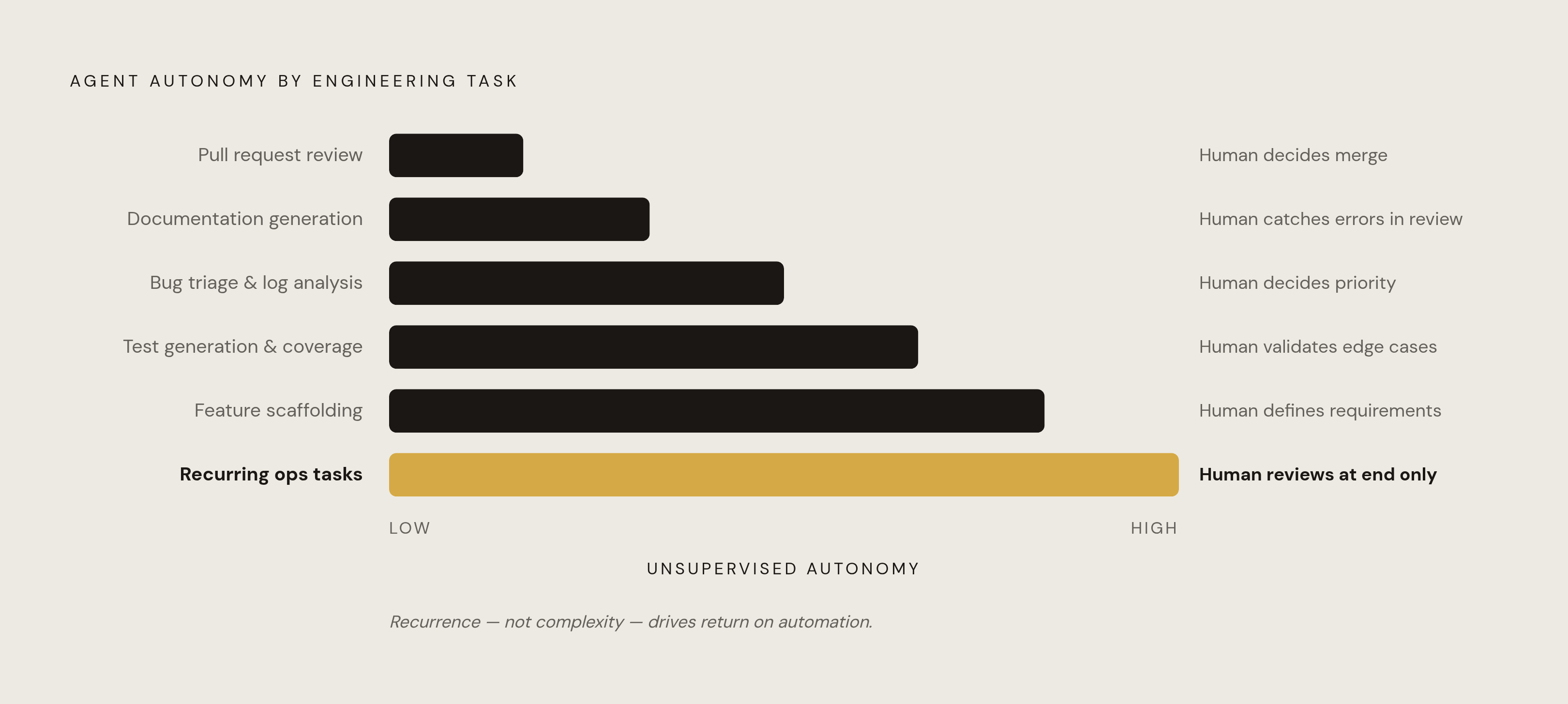
Scheduled operational work is less interesting to talk about than feature building, but it may be the category that returns the most consistent value, because these tasks are triggered by external events, produce structured outputs, have clearly defined completion conditions, and recur without end.
Dependency updates are the cleanest case. The input is a package manifest paired with a security advisory feed. Nothing about that chain requires human judgment until the review step at the very end.
Migration scripts work the same way whenever the schema change or API deprecation is known ahead of time.
CI triage follows the same pattern as bug triage, triggered automatically on every failed build. The agent reads the failure log, identifies whether a test is flaky or a dependency is broken, and either proposes a fix or flags the issue for a human to look at.
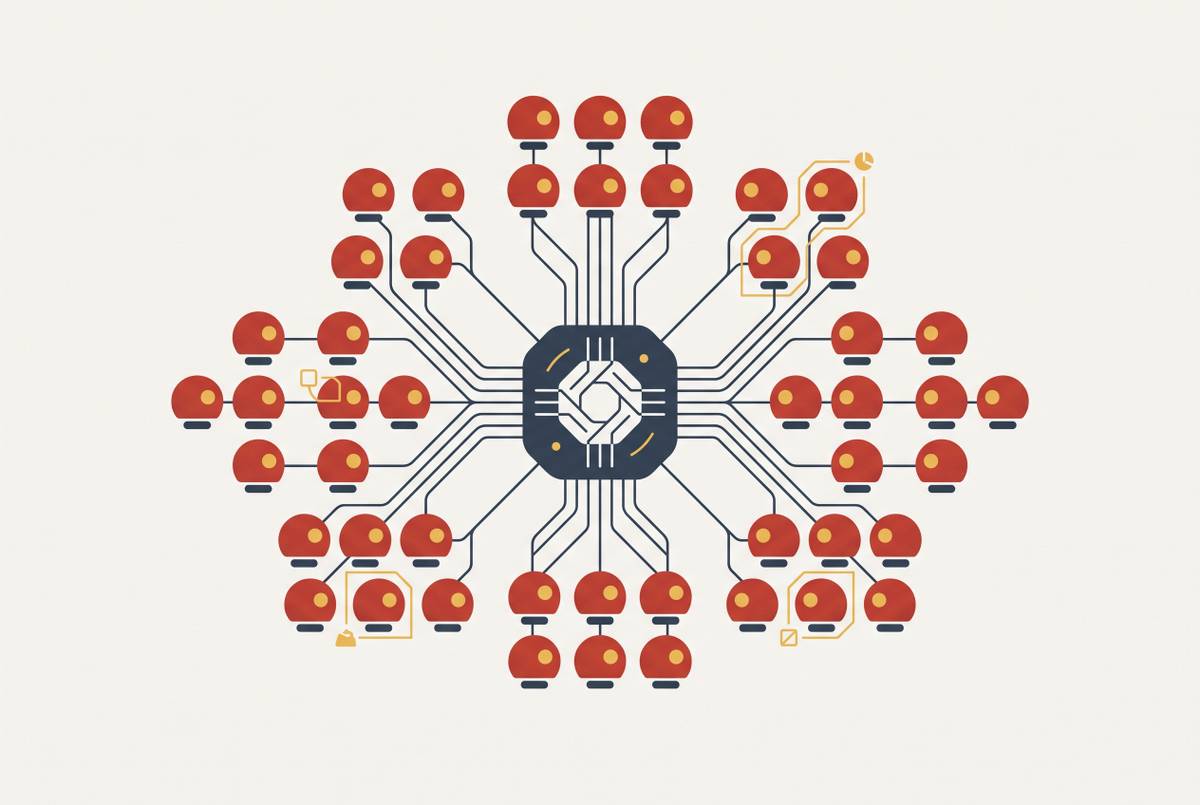
What makes this category the highest-volume opportunity is recurrence itself. A single migration is a project with a beginning and an end. A dependency audit that runs every month, indefinitely, is exactly the kind of sustained workload that eats engineering time out of proportion to how hard any single instance of it actually is. A case-bundle operating model built for a specialized simulation engineering workload demonstrates how this scales in a different engineering domain entirely: a reviewed, reusable agent configuration, built once under human review, was replayed across 140 geometry variants on a remote high-performance computing system without repeating the review step for each variant. The domain is simulation engineering, not software, but the pattern, build once under human review, replay many times against structured variants, is the same one that makes recurring operational tasks in software engineering worth automating.
Why Verified Success Criteria Matter More Than Task Complexity
Every category covered so far shares one property: the agent can check its own output against a machine-readable criterion before a human ever looks at it. That lets the human review step function as spot-checking.
The inverse case makes the point just as clearly. Architecture decisions, security-sensitive changes, production deployments, and business logic definition stay with people because no machine-readable success criterion exists for any of them. There's no test that confirms an architecture choice was the right one.
The practical question for a team deciding what to automate next is whether it can write a test, a lint rule, a diff check, or an acceptance criterion the agent can verify before a human ever sees the output. Research on human-agent collaboration in engineering workflows makes a related point: the human role in these workflows doesn't disappear, it moves, from doing the first pass of the work to reviewing it, validating it, and deciding when to escalate. That shift only holds up if the agent's output includes evidence that it checked its own work.
That has a direct consequence for governance. When every automated task produces a verifiable artifact, a passing test suite, a clean lint report, a diff with a test attached, the audit trail is already built into the work product itself. That's the foundation the next section depends on.
Governing automated task execution: sandboxes, scoped credentials, and audit trails as prerequisites, not add-ons
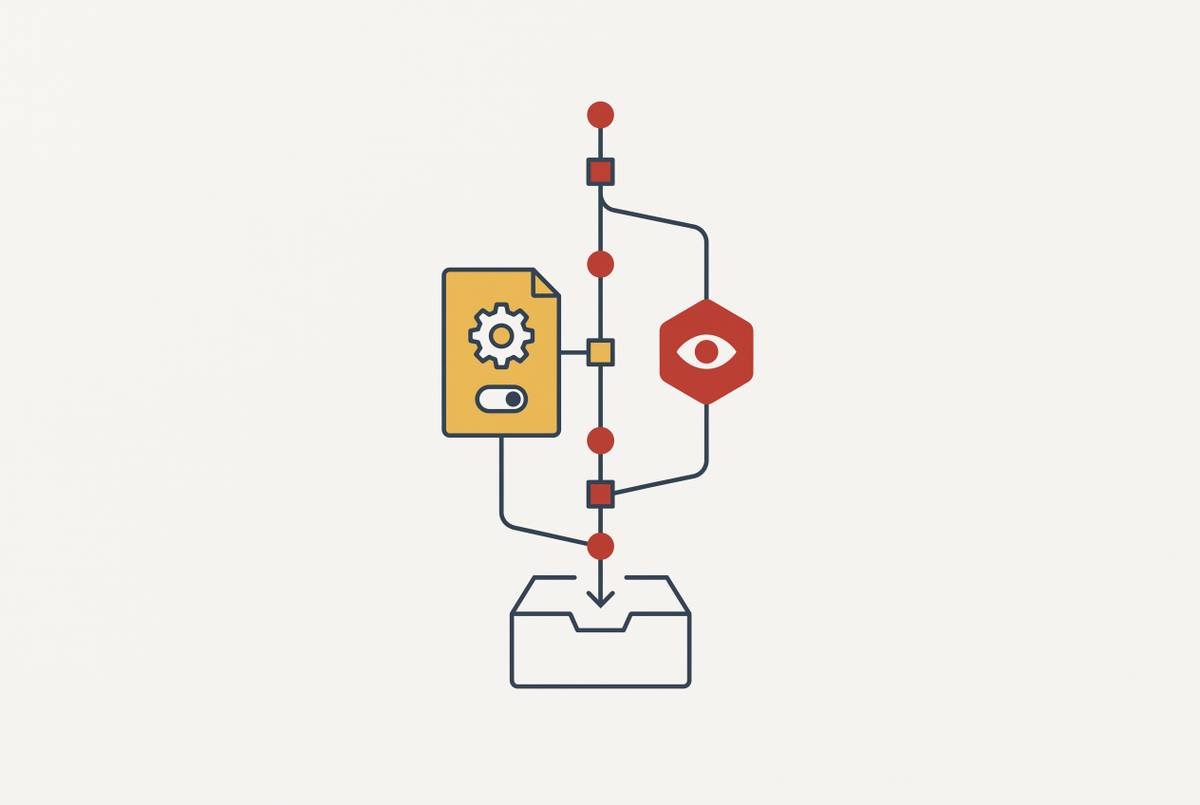
None of the task categories above stay safe at scale unless the infrastructure running the agent enforces the same boundaries the taxonomy assumes. Each agent session needs to run in an isolated environment, with credentials scoped narrowly to the task at hand, a hard cap on what it can spend in time or resources, and a complete log of every tool call it makes. The same recurrence that makes these tasks worth automating means a governance failure recurs too. It happens every time the job runs.
Isolation matters most for exactly the recurring tasks this article has spent the most time on. The property that makes automation valuable here, doing the same thing reliably on a schedule, is the same property that turns an ungoverned mistake into a systematic one.
The credential model that follows from this is straightforward: mint credentials fresh for each session and revoke them the moment the session ends. A compromised or misbehaving agent session then can't pivot to other systems or hold onto access past the task it was given. That principle is part of what makes the entire delegation model in this article safe to run at the scale the task categories above were built for.
Sources
- A Case-Bundle Operating Model for Coding Agents in OpenFOAM-Based CFD
- Humans are Missing from AI Coding Agent Research
- 2026 Agentic Coding Trends Report How coding agents are reshaping
- From Industry Claims to Empirical Reality: An Empirical Study of Code Review Agents in Pull Requests
- These Aren't the Reviews You're Looking For How Humans Review AI-Generated Pull Requests
- Automated Software Test Generation at Industry Scale ...
- Beyond Test Presence: Assessing the Quality and Robustness of Agent-Generated Tests in Open-Source Projects
- (Over)Reliance on Test Agents in AI-Assisted Software Testing