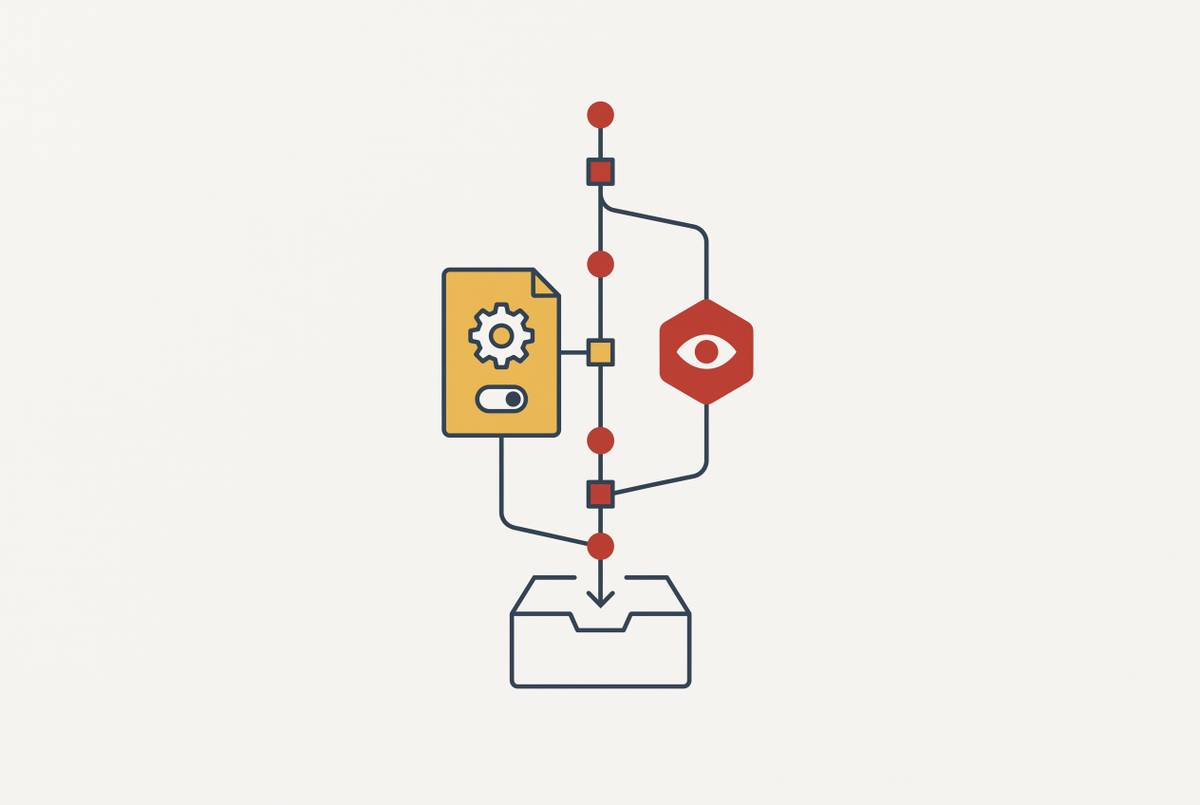
The Provisioning Contract a Managed Claude Code Platform Must Satisfy Before Governance Policies Can Take Effect
Identity, credentials, and sandboxing must be owned before policy can bind.
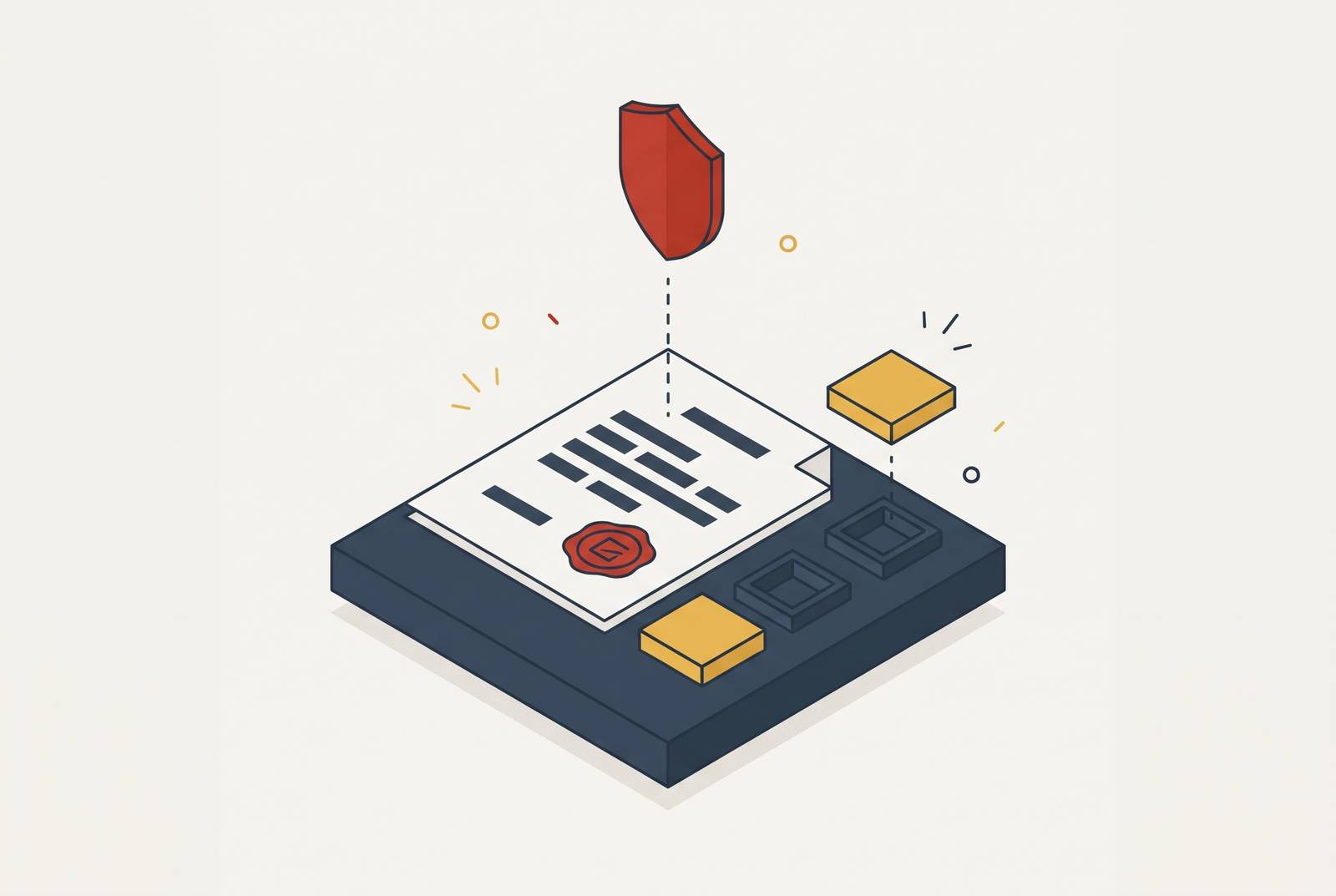
A managed cloud platform that runs Claude Code and Codex for a team must own identity, seat assignment, credential lifecycle, and sandbox isolation before governance policies can take effect. For Claude Code, that provisioning contract makes budgets, permissions, and audit trails enforceable. Removing infrastructure work from developers is not enough if their agent sessions still inherit personal accounts and unrestricted credentials.
Why provisioning is a governance precondition, not a setup phase
Governance is usually discussed through policies, controls, and audit trails. Those controls need an owned target before they can operate. A permission rule needs a known session, a spending limit needs an accountable identity, and an audit record needs an authorization baseline. Formal ownership means the platform establishes those relationships rather than assuming developers have configured them correctly.
Before managed settings, enterprise Claude Code deployments relied on convention. Developers configured tool permissions themselves, file access depended on local discipline, and projects configured MCP servers without central visibility. Managed settings replaced those conventions with policy. But that substitution works only when the platform owns the identity and runtime receiving the policy.
A budget cap attached to an unverified identity cannot establish accountable spending, while an audit log from an uncontrolled runtime cannot establish the boundaries of authorized access. Missing provisioning does not simply reduce the quality of the affected governance control. It removes the foundation that makes that control enforceable.
The four-layer provisioning stack and why each layer unlocks the next
The contract has four ordered layers, namely identity and seat lifecycle, role and cost scoping, managed policy delivery, and runtime trust. Identity comes first because every later control needs an owner. Domain capture routes logins from the company email domain through SSO rather than personal accounts, closing the shadow-account gap. SCIM, available on Enterprise, synchronizes account lifecycle with the identity provider so that departure and seat revocation follow the same process. For organizations above roughly fifty people with real turnover, that lifecycle automation can itself justify Enterprise.
Role and cost scoping turn established identity into an access decision. An engineering group in Okta can grant CLI and IDE access, while an operations group grants web access only. Group membership also gives the platform a way to control costs. Non-engineering seats rarely run long agent sessions, so lower per-user spend limits keep their token allowance proportionate to use. Without this mapping, an organization-wide cap averages together spending across different responsibilities, with no limit for each.
Managed policy delivery then binds settings to those users. The settings hierarchy runs from managed policy through the --settings flag, .claude/settings.local.json, .claude/settings.json, and finally ~/.claude/settings.json. Lower levels cannot override managed policy. An allow rule cannot undo a deny rule. Anthropic’s admin documentation distinguishes server-managed settings, fetched automatically from the claude.ai admin console, from endpoint-managed files or OS policies typically distributed through MDM. Server delivery needs Teams or Enterprise, while endpoint delivery works without Enterprise.
Runtime trust gives those settings an environment where the platform controls how code runs. Managed laptops, cloud workspaces, dev containers, VMs, and CI runners have different security properties, so the contract must specify permitted runtimes for each repository tier. Isolated environments make privileges, mounted directories, network routes, tool versions, MCP dependencies, and telemetry export easier to standardize. The runtime is therefore an enforcement boundary. Without sandboxing, an agent can inherit the developer’s credentials, network position, and filesystem access despite having centrally delivered settings.
What governance controls actually cannot do without this contract in place
Anthropic’s managed-agents permission documentation states that the server evaluates each call under the auto permission policy. Native governance nevertheless provides no tool-call-layer secret detection that intercepts a generated API key or database password before it is written to a file. Credential scoping must therefore limit the secrets available upstream.
Local execution can expose activity that cloud services do not see, but EDR provides evidence. Without established identity, a security team may see an action without being able to verify the legitimacy of access, reduce it to least privilege, or revoke it when the agent’s purpose ends.
SSO and spend caps leave other gaps unresolved. SSO without SCIM leaves offboarding manual, so a former employee’s seat can persist until someone removes it. Spend caps without role-based model access apply a limit to an undifferentiated pool. Neither control confines credentials inherited from an unmanaged runtime.
Auto mode makes that runtime dependency especially consequential. A bad instruction on a machine with real credentials can become a real incident, because the safety classifier supplements isolation as a second line of defense. The operational rule is to reserve auto mode and bypass-permissions mode for disposable containers or CI environments. Their credentials must be minted for the session and revoked on completion.
How the AGENTS.md telemetry dependency exposed a hidden provisioning assumption
Claude Code v2.1.277 introduced AGENTS.md support on September 18, 2026, but the feature failed silently on Amazon Bedrock and in telemetry-disabled sessions. The failure was not a configuration error. AGENTS.md support was implemented as a built-in plugin dependent on a remote Statsig feature flag used as a rollout kill-switch. Bedrock and telemetry-disabled sessions could not reach that flag. Turning off telemetry thus disabled a configuration feature that teams could otherwise assume was working.
Versions before v2.1.277 have no AGENTS.md support, while support from v2.1.277 through v2.1.280 is conditional on provider and telemetry settings. Teams should pin a minimum version and treat telemetry connectivity as a first-class provisioning requirement. A configuration file cannot govern a session if the feature interpreting it never becomes available.
This dependency changes how agents-as-code configuration should be understood. AGENTS.md, CLAUDE.md, and YAML configuration files depend on the platform that interprets them, and written instructions alone do not create an enforcement boundary. A CLAUDE.md file that sets tool restrictions can only offer guidance outside the managed environment that enforces them. CLAUDE.md changes should pass through pull requests like CI configuration changes, because a bad edit can quietly degrade every session on the project.
Credential lifecycle as the runtime expression of the provisioning contract
Credential handling tests whether provisioning survives actual execution. Identity and managed settings do not complete the contract if the agent then runs with long-lived, developer-scoped credentials. Unmanaged deployments can leave API keys in environment variables or .bash_profile, use personal Anthropic accounts, and lack a central mechanism for revoking access when an engineer leaves. Those credentials give access to the developer’s working environment beyond what the agent needs for its task. A managed session must not dissolve into that ambient authority.
Filesystem access exposes the practical scope of that authority. Without explicit deny rules, Claude Code can read .env files, SSH keys, ~/.aws/credentials, and other files available to the local user. The credential surface is therefore broader than the key used to authenticate Claude Code itself. A policy about approved tools does not by itself remove secrets from readable directories. Isolation and credential scoping must operate together.
Session-scoped credentials provide the runtime implementation of least privilege. They are minted when the session starts, restricted to the tools and paths its purpose requires, and revoked when it ends. That lifecycle binds access to a defined task. Without it, sandboxing can constrain behavior while leaving authority tied to credentials whose lifetime extends beyond the session.
The same session boundary supports cost governance. A defined budget and scope bound spending that a persistent session on shared credentials could otherwise accumulate. Parallel agent sessions consume token quota proportionally faster, making concurrency a cost decision as well as an execution decision. Session-level scoping makes that decision attributable to the work being performed. To keep spending predictable, teams also need to choose which model handles each request alongside an organization-wide token cap.
Tiered managed settings profiles as the operational implementation of the full contract
Engineering teams can express the contract through profiles matched to repository risk. Each tier still needs the same ownership, with added controls to meet its needs for access and evidence. Low-risk repositories focus managed policy on secret denies and restrictions on risky bash commands. JIT provisioning is sufficient at this tier because the blast radius of a misconfigured session is bounded. That narrower lifecycle requirement still requires defined credentials and runtime ownership.
Production-adjacent repositories add managed hooks, tighter MCP controls, and stronger telemetry requirements. At this tier, SCIM provisioning is required because manual offboarding leaves a window in which a former employee’s session could touch production-adjacent code. Lifecycle automation becomes part of the repository’s access boundary. The additional controls depend on a reliable relationship between the user, the seat, and the active session.
Regulated repositories require a stronger runtime and evidence profile. Dev-container or VM requirements enforce isolation below the policy layer, while proxy routing, restricted WebFetch, and stricter evidence retention constrain access and preserve its record. Auditability must cover both access and actions. Enterprise also offers a HIPAA-ready arrangement with a signed BAA and custom data residency on request. Those contracting and retention provisions complement the technical boundary.
Managed settings profiles should be version-controlled and reviewed in pull requests. A profile change alters the governance contract for every covered session, so YAML-based configuration belongs in the same review workflow as other infrastructure changes. Budget enforcement belongs in the platform as well. Hard caps at the session, developer, and time-period levels bound spending rather than leaving it to someone watching a dashboard. Running Claude Code with that contract is a production deployment posture, whereas personal credentials on a laptop remain a prototype regardless of prompt sophistication.
Observability as the evidence that the contract is holding, not a substitute for it
Observability verifies the relationships established through provisioning. Identity says who owns the session, role-scoped credentials set what it may access, the sandbox sets what it can reach, and managed policy sets the rules it must follow. A transcript can then be compared against those boundaries. Without them, it records events without establishing whether access was justified.
Anthropic’s Compliance API documentation describes local session transcript endpoints added August 11, 2026. They cover the text, tool_use, and tool_result block types, capturing user prompts, bash commands, reads and writes, and MCP commands. Whatever reaches the model is logged because the harness resends full context on every turn. That gives investigators execution detail, but its interpretation still depends on the provisioned owner and scope.
Unattended operation needs three complementary views of that evidence. The per-run record shows what a session did, fleet-wide telemetry shows activity across the organization, and the produced artifact shows the result. OpenTelemetry adds visibility to controls established through permissions, hooks, managed MCP, sandboxing, and CI/CD gates. Those controls decide what the agent may do, while telemetry shows what it asked to do. Permission and activity can be compared only when both layers are fully provisioned.
The practical test arrives when a session ends. Can the platform answer, without manual investigation, who triggered it, what credentials it used, what policy governed it, what it did, and whether that activity was within scope? Reconstructing any answer from partial logs reveals a contract gap. Execution supplies the activity record, but the owner, authority, and permitted scope must be determined before the session starts.